
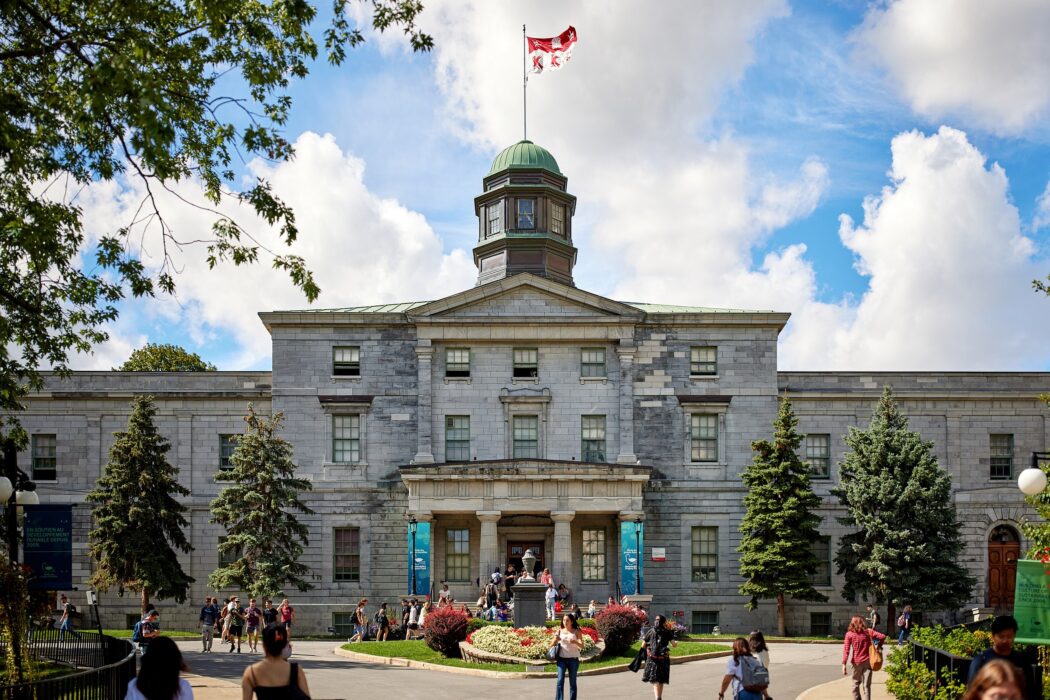
McGillians now have something new to brag about at the dinner table: McGill University is ranked top 1 university in all of Canada! The QS World University Rankings released their 2026 list, in which McGill takes first place in Canada and 27th in the world. But what does that truly mean?
These rankings don’t determine if a given university is outright “good” or “bad.” Instead, the criteria used to decide which universities rank higher are much more complex. The company that compiles these rankings, Quacquarelli Symonds, better known as QS, uses a wide range of measurements that can be divided into 5 main performance lenses.
First, the Research and Discovery lens is worth 50% of the final ranking score. It covers both the Academic Reputation (AR) indicator and the Citations Per Faculty (CPF) indicator. As its name suggests, AR measures the reputation of universities and their programs. To do so, academic experts nominate those universities based on their subject area of expertise through QS’s Academic Survey. Meanwhile, the CPF indicator assesses the amount of research being conducted by measuring the average number of citations achieved by the academic staff—more citations indicate not only more publications, but also more influence within the academic community. McGill scored 98.1% and 72.4%, respectively.
Beyond research, McGill also shines in employability. The Employability and Outcomes lens contributes 20% of the total score and measures how well graduates are prepared to enter the workforce. This is done through the Employer Reputation (ER) indicator and the Employment Outcomes (EO). Although your first instinct might be to assume that ER measures the prestige of companies that graduates end up working for, it’s actually the opposite—ER measures how employers around the world perceive a given university and its programs through an Employer Survey. On the other hand, EO measures how effectively a university ensures a high employability for graduates as well as how many of those graduates have made a meaningful impact on society. Luckily for McGill students, our university scored 93.5% and 98.9% in these two indicators!
Furthermore, the Global Engagement lens makes up 15% of the score and evaluates the university’s level of internationality using the following indicators: International Faculty Ratio, International Research Network, International Student Diversity, and International Student Ratio. This provides an inside look into not only how varied both the student body and the faculty staff are, but also how diverse its research network is— meaning it measures that institution’s success in forming and maintaining international partnerships with other institutions. McGill’s scores for each of those indicators range between 69.6% and 93.5%.
In turn, the Learning Experience lens represents 10% of the total and aims to capture the general learning environment for a given university’s students through the Faculty-Student Ratio indicator and the Staff with PhD indicator. The logic behind the Faculty Student Ratio, for which McGill scored 67.3%, is that the more academic staff an institution has, the more resources are available to the student body and thus, the better the learning experience at that university is. It also considers the count of staff who have obtained doctoral degrees to reflect the depth of academic expertise and quality of instruction available to students.
And last is the Sustainability lens, an indicator that’s worth 5% to highlight and give credit to the institutions that show a commitment to promoting and advancing more sustainable practices. It covers environmental, social, and governance (ESG) factors that include on-campus initiatives as well as academic research and many more ESG-oriented projects and policies. McGill scored an impressive 96.3%!
If there’s anything you should remember about all these scores, it’s that McGill excelled across all categories. As per our motto, Grandescunt Aucta Labore – by work, all things increase and grow, we can and should be proud of the efforts that made McGill reach the top spot in QS’s World University Rankings. So at your next family dinner, you can say with confidence that McGill isn’t just a good university, it’s Canada’s best.
Sources: topuniversities.com