Moore’s Law is an important descriptor of trajectory in technological innovation. This principle states that the number of transistors on a microchip doubles every year, pointing to a state of exponential growth and constant improvement. Given that in our lifetime we may be able to see both the introduction of the first electric vehicle as well as mainstream self-driving cars, Moore’s Law seems increasingly relevant. Self-driving, or autonomous driving, is the idea of a car being entirely operated by software, requiring zero human interaction. In recent years, autonomous driving has sparked greater interest, with entrepreneurs leading the charge in revolutionizing the industry. The efforts made by these tech pioneers have made the possibility of full autonomy closer to becoming a reality. However, despite strong support from its proponents, autonomous vehicles have sparked strong criticism and regulation from government officials.
Autonomous vehicles operate using multiple sensors and cameras to visualize the road they need to travel. They are built on software that is trained on large amounts of driving experience data (both real-time and virtual data). The sensors they use are LiDAR sensors which are capable of mapping any environment, in light or darkness, and in virtually any weather. Previously, in 2010, it was assumed that about 1 million lines of code were implemented into each car. Now it’s assumed that cars have up to 100 million lines of code. AI has been a transformational piece of the AV industry. With the same data, the software (trained on AI models) can make split-second decisions that improve overall driving. With better GPUs (Graphics Processing Units) and higher processing power, these models can be trained on larger amounts of driving data, and they can predict or capture even the most niche circumstances, creating a safer, more prepared vehicle.
There are 5 levels used to describe the capabilities of autonomous vehicles and their degree of autonomy. At level 4 autonomy, cars are capable of fully carrying out road safety behavior without the intervention of a human. However, the cars must still be monitored by a “supervisor” either in the car or remotely through the car’s software. Thanks to new developments in artificial intelligence, leading companies like Waymo and Tesla have both reached level 4 of autonomy. These companies are taking steps toward achieving level 5 of autonomy, reflecting the significant advancements made in the industry.
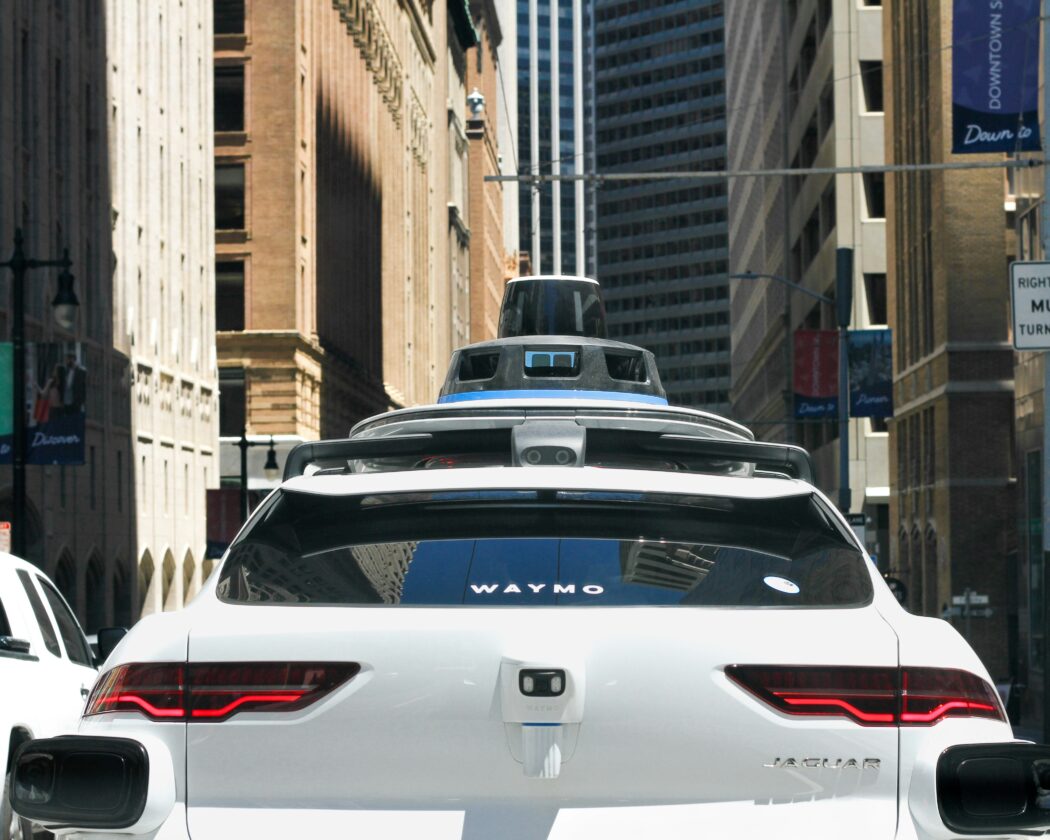
Specifically, Waymo robotaxis are already showing promise; a single remote supervisor at Waymo is now overseeing twice as many cars compared to a year before, slowly decreasing the need for supervision. This startup, valued at $45 billion, is focusing on self-driving taxis and has seen tremendous growth in recent years.
Acquired by Google in 2016, Waymo has become the leader in robotaxis.
With the recent announcement of their expansion into 10 new cities, including London, the company has cemented itself as not just an important player but a dominant one. Waymo currently makes more than 350,000 trips weekly in San Francisco, Los Angeles, and Phoenix up from 200,000 less than six months ago, and has plans to expand into Austin, Atlanta, Miami, and Washington, D.C. In addition, Uber, the leading ride-sharing company, has agreed to partner with Waymo for its expansion into Austin and Atlanta, helping to leverage Uber’s expansive consumer network. Waymo has a competitor in Tesla which, led by Elon Musk, are attempting to roll out its Robotaxi strategy with a fleet of autonomous Teslas. They have recently launched their first service in Austin, Texas, but still are well behind Waymo.
Autonomous vehicles are not limited to robotaxis or ride-sharing companies. Trucks, forklifts, robots, and cleaning vehicles all benefit from advances in autonomy. In the trucking industry, Aurora is attempting to decrease costs by offering safer self-driving trucks. In recent years, truck driving salaries have risen to over $150,000, and, combined with the greater restrictions on driving hours being imposed on truckers this has led to bottlenecks in logistics. Due to this, freight delivery companies are incurring high labor costs and costly delivery fees. Aurora is offering an autonomous solution that does not require high labor costs and can increase driving hours and the speed of freight transport.
Experts, along with government officials, have shown their disapproval of autonomous vehicles. While autonomous driving offers numerous benefits, it also introduces significant challenges that must be addressed. For instance, taxis and ridesharing apps are the root of several small-incident crashes in large cities across America. In addition, there were over 400,000 cases of sexual assault reported in Ubers between 2017 and 2022. In addition, in 2023, Cruise, a division of Chevrolet’s self-driving unit, had an unfortunate crash where a pedestrian was hit. This crash led to several skeptics calling for AVs to be reconsidered and caused many setbacks. Cruise’s permit to drive in California was revoked, and the company shut down its operations in late 2024.
This shows the risky nature of building autonomous vehicles in a world that is not forgiving of mistakes.
Thankfully the crash was not fatal, and it led to important questions and improvements within the autonomous industry. It must also be said that we as humans are highly scrutinizing of robotic systems and are often quite forgiving of our own errors. Although critiqued for certain shortfalls, autonomous vehicles have many associated benefits. Autonomous driving is expected to reduce collisions by 90% and remove human error, thus decreasing the high number of deaths associated with car crashes. They also offer a safer driving experience. In a 2024 NBC interview in San Francisco, a woman admitted, “I’ve been in one late at night and thought, ‘This is great. I don’t have to worry about a stranger taking me home.’” These kinds of safety benefits —for passengers and for other cars on the road—offer a strong case for autonomous vehicles.
There are many variables that will inevitably decide the fate of autonomous vehicles. They continue to show a lot of promise, with software that is demonstrating an increasing ability to operate without supervision. Leading companies in the space like Waymo are expanding at a rapid pace and will continue to deploy technology and capital to reach scale. The cost of materials and sensors is decreasing but still remains a hurdle. People’s opinions and behavior towards AVs will ultimately be a defining factor, as consumers vote with their dollars for the services they prefer. So far, consumer sentiment has been strong.
With increasing levels of compute and advanced artificial intelligence models, these self-driving vehicles will likely reach full autonomy quicker than we think.