
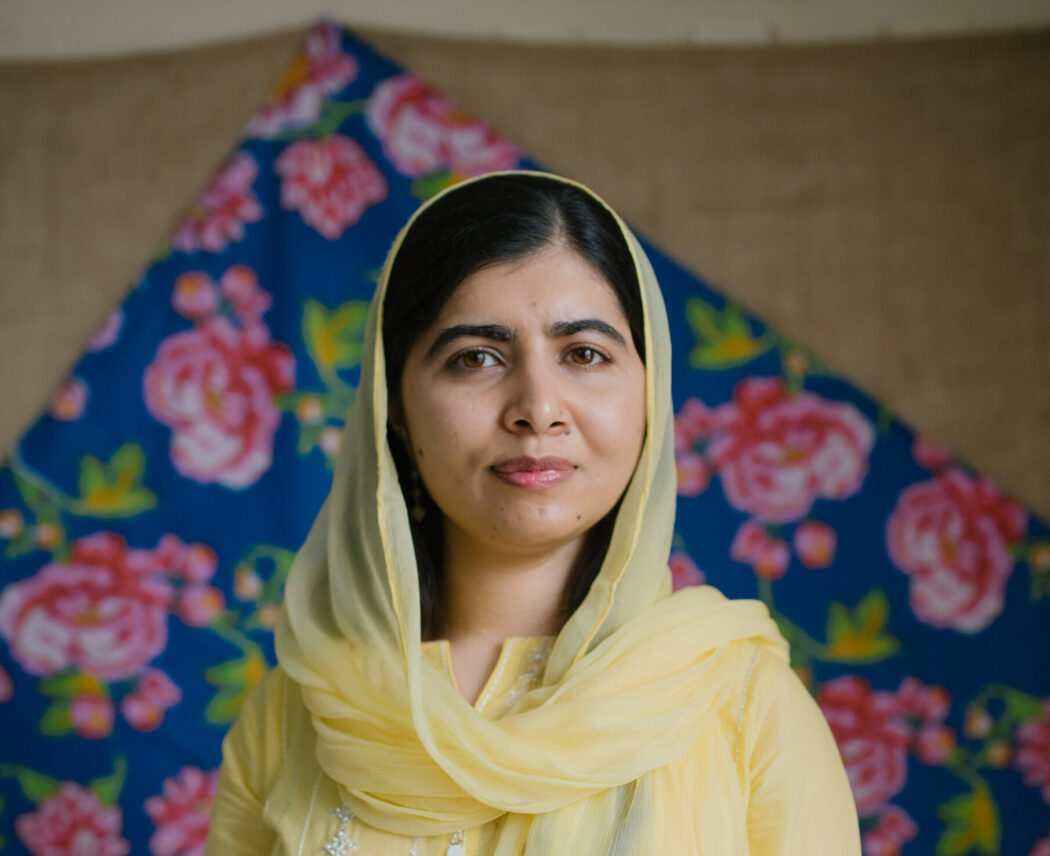
More than ten years after Pakistani education activist and Nobel Peace Prize Laureate Malala Yousafzai published her first book, I Am Malala, she released her second book, titled Finding My Way. While it deals with grave topics, the book was fun to read because it reflects Yousafzai’s humorous personality as she details her sometimes awkward, sometimes courageous journey into adulthood.
Yousafzai’s relationship with her parents is a constant source of frustration throughout the book. She understood that when her parents asked her, “What will other people think?” They were doing so out of fear and because they wanted to protect her from possible prejudice. However, when she starts her studies at Oxford University, she orders clothes that “Kylie Jenner would wear”. She sneaks them in her suitcase, determined to push back against her mother’s fashion ideals and try her best to integrate herself into normal college society, even though she’d already achieved world-wide fame for her activism.
Part of that integration meant trying new things to figure out what she enjoys, just like most university students do. However, Yousafzai faced the weight of the world, as being in the public eye meant being blamed for global issues. Often, she was fighting a losing battle. She received criticism from the Western world, which called her headscarf “repressive against women”, while the religious conservative viewpoint held by many citizens of her home country was that she was “un-Islamic.” One time, she tried out boat rowing, but without her knowledge, the paparazzi took a photo of her, and her outfit sparked backlash. In response, she writes, “The patriarchy had grown so fragile that it could be threatened by a pair of jeans.” Despite these immense pressures, Yousafzai also dealt with relatable struggles. She grapples with the irony of being an education activist who falls behind in her schoolwork. While it’s easy to see how her contributions to activism have made her representative of courage and resilience, Yousafzai writes that she never imagined being those things. At school, she was messy and sometimes bitter; in other words, she was a normal kid who was a victim of a terrible thing. Her bravery was necessary because she was unable to imagine a future where she would be forced to stay inside all day and let go of her dreams.
The audience follows Yousafzai’s mental health journey as she copes with all of these struggles while being a student. Mental illness in her hometown of Mingora, she explains, is highly stigmatised and leads to social isolation. However, a weed-induced flashback of the violent attack she experienced from the extremist Islamic fundamentalist group, the Taliban, at the age of fifteen, forces her to confront her anxiety and post-traumatic stress disorder with therapy. She comes to terms with the fact that recovery is a journey and therapy takes time. However, it is nearly impossible to recover from something that continues to harm people. The Taliban returned to power in Afghanistan in August 2021; since then, they have continued to strip girls and women of their education and working rights. Yousafzai denounces the lack of action of world leaders as cowardly and their previous messages of support for women in Afghanistan and Pakistan as exploitative. She concludes that her role will always be to improve girls’ education worldwide. The school she funded in the Shangla region of Pakistan, along with the Malala Fund, works to fulfil that promise.
Throughout the novel, Yousafzai is incredibly sincere with her audience. What surprised me the most was her unsparing honesty about the things that never worked out or were never resolved. It reminded me that these experiences are equally as formative as successful ones. She describes her delusional first love, the friendships that ended, and the relatives that let her down. The most personal line was when she writes that she was never healed, even when she “recovered” from her multiple surgeries. She was forced to flee with her family, leaving behind the relationships and history their ancestors had made over hundreds of years in Mingora. Her family’s return years later confirmed what she had lost and gained from her decision to speak up against the Taliban. “Your skin was made to sit under this sun, your lungs were made to breathe the warm air.” When she visited the school she had created, it served as a reminder of both the loss she and her friends had felt when their futures were taken away and of the new opportunities she had helped bring to the next generation of girls.
Despite the trauma Yousafzai faced from the Taliban’s attack, her longing to return to Pakistan never ceases. She explains that “Pakistan was not ‘before’ and England was not ‘after,’ but parts of an ongoing story.” At Oxford, she finds a community of friends and her future husband, Asser. Her parents are reluctant to allow her to marry someone outside of the community (Asser is Pakistani but not Pashtun), but the choice is ultimately hers. Her father puts it best: “Malala gave herself away.” Throughout the novel, she is courageous in different ways. When she sees an opportunity to meet new people, form new relationships, and start new projects to improve educational equality, she always goes for it. Her ability to take chances and work hard on the things that matter to her is what makes her so inspiring.
