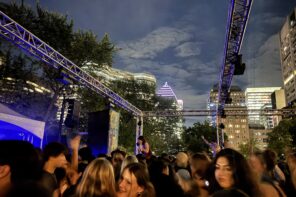
When my friends and I exited the tightly-packed metro car at Beaubien station one evening in late January, it was snowing indigo outside against an indigo sky. On the sidewalk, people rushed around us, hurrying to their various Thursday night obligations. We briskly walked to Theatre Plaza, excited to watch the McGill Arts Undergrad Theatre Society present Natasha, Pierre, and the Great Comet of 1812.
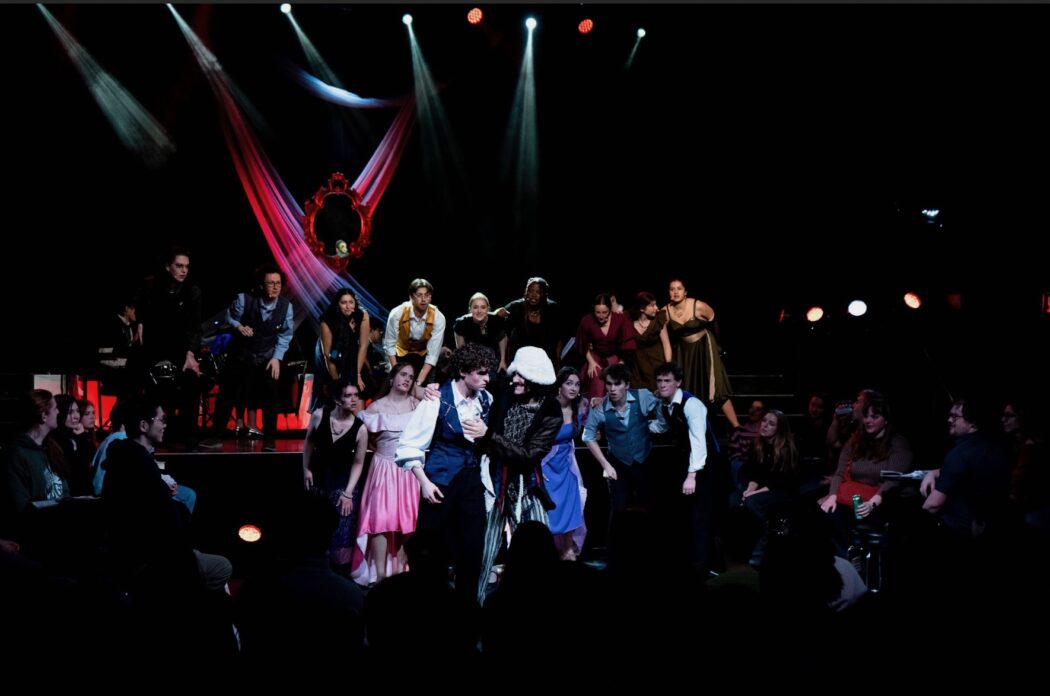
As the first light flickered on the Theatre Plaza stage, a brooding voice sang in harmony with the violin. I realized I would not simply watch the show and go home. This was, in every sense, a show that transported its audience into an emotional and magical world, the exact way a musical should.
Set in Moscow in 1812, Great Comet captures a heartbreaking moment of love, fear, and self-discovery. Pierre is a struggling alcoholic disillusioned with his life and his loveless marriage, and Natasha is eager to find love while Andrey, her betrothed, is far away fighting against Napoleon’s army in the Russia-France war. Both characters, and their equally complicated and desperate peers, undergo difficult choices, romantic temptation, and a longing for meaning.
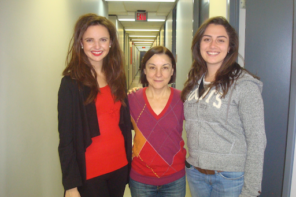
Knowing nothing about theatre (besides what I learned from Glee), I decided that if I were to properly portray the musical, I would need to hear about it from the perspective of its artists. So, I secured an interview with Milan Miville-Dechene and Ariel Goldberg. Milan, the director of the musical, is a U2 McGill student of English (Cultural Studies) and Music Entrepreneurship. Ariel, a cast member who played Andrey’s sister Mary, is a U0 Faculty of Arts student.
I wondered, why this show? What makes Great Comet so special? Milan answered, telling me that
“Great Comet is made for us. The ‘us’ is young people, people in university. It’s got EDM, R&B, rock, folk, all these cool genres that are unconventional for musical theatre. I also think the themes are so relevant right now—it calls for more humanity and connection during times of political unrest. It talks about how we put up facades, how we find moments of introspection, and I think that’s what we need to hear right now, as young people.”
As the first light flickered on the Theatre Plaza stage, a brooding voice sang in harmony with the violin. I realized I would not simply watch the show and go home.
In other words, the show embodies precisely the humanity that, as university students, we crave. Ariel had a similarly personal perspective. “What initially drew me to Great Comet when I was younger,” she told me, “was that it was really fun to listen to. But as I’ve grown, I’ve started to see that there’s more to it. It leaves you thinking.”
I asked Milan to tell me about what the general directing process entailed. He said:
“I really fell in love with the show, first-year, and I thought one day maybe I’d get the opportunity to stage it at McGill. This September, we started casting. Once we got the cast up and running, we started with blocking, we started working with our designers to get the world built… and I think one of the coolest parts of the process was seeing what actors and designers brought into it to make our production unique. I think it’s a show that’s so open-ended, and that made the process really fun.”
Another challenging aspect of the process was the timing. Milan remarked, “we had very little rehearsal time for this, so a lot of it was the actors working independently and finding those characters on their own.”
Next, I asked Ariel about her experience as an actor on the show. As a longtime musical theatre artist who grew up singing and acting in school and extracurricular productions, Ariel explained that she was excited to continue her passion in a university setting. “Coming into university, I was really nervous that I wouldn’t get an opportunity to do theatre in any capacity,” she said. “So, when I was cast in Great Comet, which is my favourite show ever, I was so excited. As I developed stronger connections with the whole team, I was able to come out of my shell and tap into the character in a more effective way. I think that Milan and the whole production team did an excellent job at fostering a beautiful community.”
One aspect of the show that brought the music to life was the on-stage orchestra. Milan explained that since the music is “at the heart of the show,” it was “important for the music to be at the heart of the staging. They’re more visible that way, and I’m happy with that.” Ariel agreed, noting that “the musicians are part of the show. The band was amazing, they’re awesome.”
The final scenes of the show depict a mysterious Great Comet looming ominously over the characters’ world. While it is not exactly clear what this comet is, or what it means, Milan and Ariel had fascinating interpretations.
“Throughout the show, the characters are encapsulated by false light sources,” Ariel reflected. “They’re looking to see the future, looking at the candles and in the mirror, or they’re looking to the moon. They look to these things for insight. But at the end, Pierre is looking at the Comet as a light source, and he’s thinking about the present. It’s a moment where he’s seeing the world in the present for what it is. The music becomes stripped back and suddenly it’s a moment of spoken speech for the first time in the show. When it strips down, Pierre is having that moment of authentic expression.”
Milan agreed, explaining, “Pierre is first blinded by that comet, but then he opens himself up to change. It is that moment of feeling possibility, because you have Pierre so stuck in his stagnant life until that point. My goal was for people to find their own meaning for the comet, and what that inspires for them.”
Throughout Great Comet, cast members interact with the audience in various ways: the cast frequently disperses amongst the audience, and viewers are even brought up on stage at points. As an audience member, this was hilarious and engaging. Every time a cast member was near my friends and I in the audience, we were wide-eyed and captivated. Ariel said, “It’s an objectively funny thing to see audience members who didn’t fully know what they were in for being pulled up on the stage. I enjoyed it, and I think it’s an important part of the show—immersing the audience so that they have a stake in the story.”
I wondered, why this show? What makes Great Comet so special? Milan answered, telling me that “Great Comet is made for us. The ‘us’ is young people, people in university.”
Milan further commented on this interactive element, saying, “The function of the show’s immersive aspect is to give the audience an active role, an actual stake and responsibility in the action… Like during the duel scene, where we played a lot with neon, disorienting lights. It’s like, ‘wow, that’s so cool, so fun, it feels like a club’—but also, it’s fake, it’s not real, it’s not authentic. Its purpose is so that you lean in a little more when you have those real poignant moments of authenticity.”
Talking to Milan and Ariel, it was clear that the cast and crew of Great Comet highly enjoyed working together on the show. I asked them what they loved most about the process. Ariel answered, “The first time I heard all of us sing together was a really cool moment. That got me really excited to do the show. Another highlight was the first time I saw the theatre, because it’s just gorgeous. There’s so many details on the walls, the gold, the chandeliers. I was like, I’m performing in here? What the heck? I get to spend weeks in here?” Milan responded that one highlight of his was working for the first time with Maya Kojima, the associate choreographer. “I think it was 7 PM in the Ferrier building, and we worked so well together, and she’s amazing. That was a really special moment.” He remarks that his “real big moment” was on opening night—“that first moment, when the lights came up, and the actors were everywhere… I was a little bit nervous, but I was also like wait, yes, this is what the show is. The show is a tightly packed room, and everybody running around everywhere. It finally felt like everything came together.”