
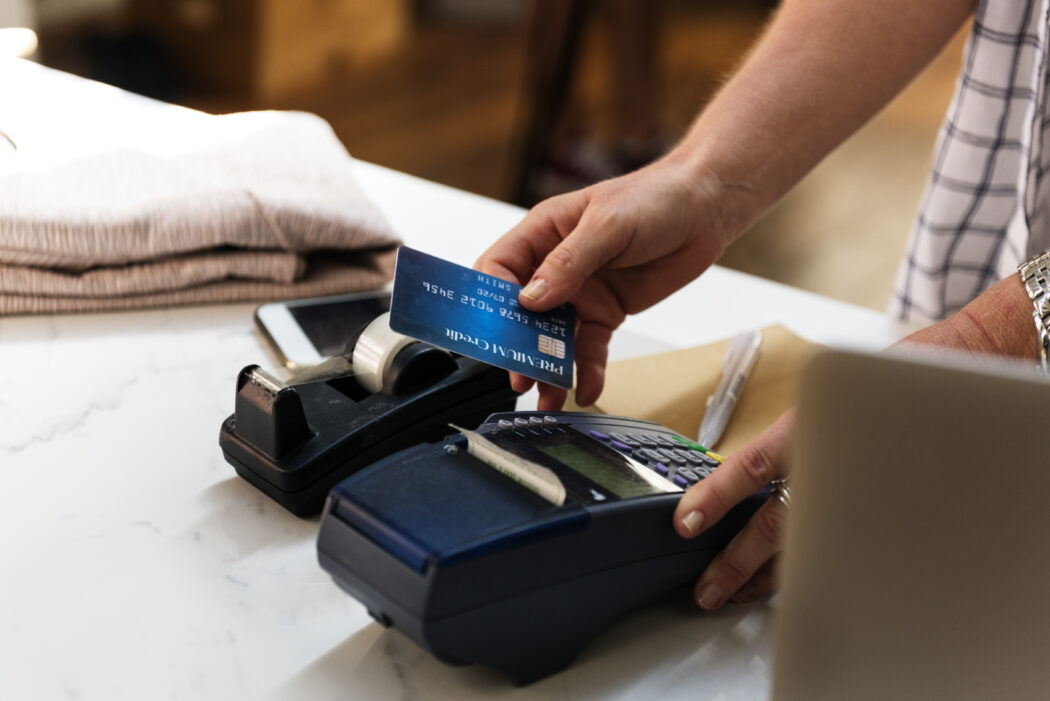
As our lives become increasingly oriented towards the digital world, so does our currency. Payment cards, e-wallets, and online banking accounts are not only symbolic of the rapid digitization of daily life, but have come to shape the economy by changing how money is secured, stored, and spent. Although there are some advantages to cashless payments — namely, their convenience and efficiency — they introduce a set of dilemmas unique to the digital medium; fraud, demographic exclusion, and issues of consumer spending have raised concerns since the introduction of payment cards. The immediately apparent benefits of cashlessness, however, often overshadow these concerns.
From a customer perspective, cashless payments give instant and secure access to all our funds at once, access to the digital economy, as well as payment options on credit that offer a workaround to periodic paychecks. For merchants, the opportunity to tap into larger markets beyond their immediate geographic region expands their consumer base. All these factors contribute to increased accessibility and convenience of consumer spending, and in turn drive economic growth. Given that a country has the appropriate economic infrastructure to support card-based and electronic payments, it is likely that such technologies will be welcomed by both buyers and sellers alike.
However, the implementation of these convenient technologies comes at a cost. Potential security threats associated with cashless forms of payment are often overlooked, and are instead presented as a ‘safer’ alternative to physical cash. In Sweden, the shift towards cashlessness was accelerated by a sequence of robberies in the 90s, resulting in the association of cash with criminal activity. As such, cashless payments were promoted as anti-crime measures.
In 2022, only 8% of Swedes used cash for their latest purchase, and it was predicted that by 2025 Sweden would be completely cashless.
Despite this, online payments have made Sweden more, not less, vulnerable to fraud. Electronic identification systems such as BankID (which are ubiquitous across the country) takes away the certainty of where spent money is going, extending the opportunity to fraudsters to take advantage of consumers with weaker digital literacy. According to a 2025 report from Teitoevry Banking, 16% of Swedes reported themselves or a family member being victims of financial fraud. To some extent, the ubiquity of these technologies is to blame. Since applications such as BankID or Swish (a Swedish app that operates as a mobile payment system) are integrated into daily life, they no longer function as security measures, but rather as a mindless extra step in transactions. Although concerns of privacy and efficiency are what drove Sweden’s rapid transition to a purely cashless society, it is the new norm of cashlessness that introduces brand-new, unmitigated risks to both consumers and merchants.
More recently, the Swedish government has started to recognize these security risks, in addition to the looming threat of Russia’s cyberwarfare against NATO countries which would leave a digital economy vulnerable to collapse. In light of the current geopolitical climate, the Swedish government has acknowledged that the connection between cash use and crime has perhaps been exaggerated beyond the truth, and is now encouraging households to keep cash in regular circulation. In 2024, the Swedish government distributed a brochure to all households emphasizing the importance of individual preparedness in the face of crisis. Aptly named In Case of Crisis or War, this move signals that the government has begun to understand that the implications of economic digitization are more robust than they initially expected.
Security threats are not the only risk—cashless payment methods have also had an impact on consumer behaviour by changing how we perceive our payments. Just as the banknote offered a lighter, more transportable alternative to bulky metal coinage, payment cards and e-wallets make storing money even more convenient by eliminating the physical form altogether.
The accelerated efficiency of digital mechanisms erodes the psychological barriers to spending, termed the “pain of paying” (i.e. the “negative emotions associated with the act of paying…both [before and after] a payment is made”). This raises concern, as the perception of loss is an important natural barrier to overspending. Simply put, cash occupies physical space, and this affects how we think and feel about spending it.
Physically handing over a bank note invokes a sense of tangible loss, while digital forms of payment make the act and cost of paying invisible.
Cashlessness decreases this “pain of payment” and hides money’s value by storing it online. Tapping a card or using an app to make a transaction more efficient leaves less of an imprint on the mind, leaving consumers vulnerable to overspending and underestimating the amount spent. When cash is used, its presence diminishes, whereas a credit card will never disappear, even if its value reaches zero or below.
This is an alarming phenomenon in itself, but it also opens the door for companies to come up with new and creative ways to exploit the weaknesses of human perception for their own profit. Apps such as Klarna and Afterpay, for example, promote a “Buy Now, Pay Later” (BNPL) model which takes advantage of decreased psychological visibility of digital spending mechanisms, by breaking up a single purchase into a multi-installment financing plan. These BNPL plans are being increasingly advertised to encourage consumers to spend beyond what they can afford by making frivolous purchasing dangerously accessible.
Can we blame the overspending crisis on individual consumers? It’s hard to say so, when governments similarly spend beyond their means when given access to funds that allow them to do so. It seems overexpenditure is simply a feature of human nature.
Despite its potential detriments, a cashless future is becoming a reality. As the prospect of a cashless society becomes less a question of if but rather when, we must be wary of the rapid pace at which these new technologies are introduced, and the motives of those introducing them.