
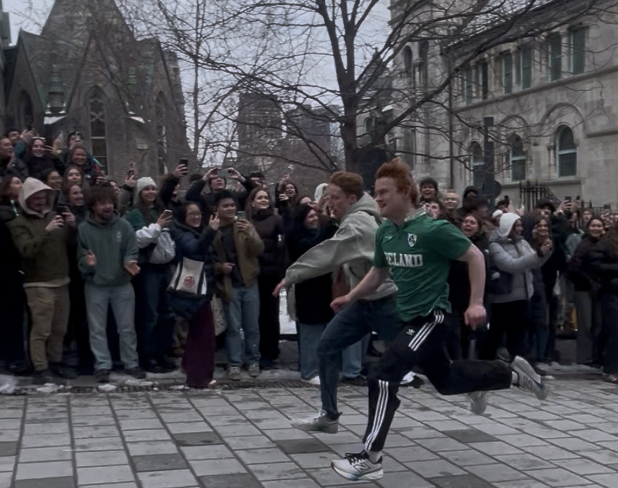
Despite icy conditions and a smaller-than-usual turnout, McGill’s annual Ginger Run brought energy, laughter, and a sense of community to campus once again on St. Patrick’s Day. The Ginger Run, which is a loosely organized tradition in which red-haired participants sprint a short course while spectators cheer from the sidelines, has become a niche but beloved event at universities across North America. Specifically McGill, the race typically draws a crowd of students eager to either compete or simply watch the spectacle unfold. This year’s run, however, came with an added challenge: extremely icy conditions in mid-March. As runners approached the finish line, at least one participant took a noticeable tumble, highlighting the unpredictability and occasional hazards of an event that thrives on spontaneity rather than structure.
Even so, the atmosphere remained upbeat. While the number of participants was lower than in previous years, those who did attend made up for it with enthusiasm. Cheers echoed along the route, and the event’s informal nature encouraged students to engage without the pressure of formal competition. Unlike traditional races, the Ginger Run offers no official prize. There are no medals, no rankings posted online, and that lack of structure is precisely what continues to draw students in. Harrison Bender, a Desautels student who participated in this year’s race, responded to the question of what he expected from winning: “I wasn’t expecting to [win], yet the energy and excitement was through the roof.” These sentiments reflect the broader attitude among participants, many of whom approach the run with a sense of humour rather than competitive ambition. Ultimately, the event’s appeal lies in its simplicity. With no formal registration process or governing body, the Ginger Run largely exists through word of mouth and student initiative. Its somewhat obscure status only adds to its charm, creating a sense of insider participation among participants.
Beyond the novelty, the event’s timing also contributes to its significance. Held just around the corner of finals season, the run serves as an informal send-off to the academic year. For many students, it represents a last opportunity to unwind and connect with peers before the pressures of finals season set in. In that sense, the Ginger Run is less about red hair and more about shared experience. It offers a moment of levity in an otherwise demanding academic environment, reminding students of the value of community and collective enjoyment. As McGill students begin to shift their focus toward exams and end-of-term deadlines, events like the Ginger Run serve as a brief but meaningful connection before a tumultuous time.