When attempting to understand the economy, most of us look towards familiar indicators; whether that is GDP, unemployment rate, interest rates, or the S&P 500. These quantitative indicators dominate how we make sense of financial reality. Yet, in an era shaped by unpredictable forces–such as shifting government policies, measurement techniques that obscure real trends, and AI-driven market distortions. Alone, numbers often reveal only part of the story.
Sometimes, the most honest reflection of economic conditions is found in the subtler, everyday choices we make–including those in our closets.
Fashion trends, often dismissed as superficial, serve as a powerful qualitative lens on the state of the economy by visually revealing how consumers feel, spend, and respond to economic conditions.
Fashion has historically moved in tandem with economic cycles. As outlined by the Fashion Economist, there is a clear pattern: when recessions hit, trends shift toward practicality, durability, and understated aesthetics. For example, the 2008 crisis popularized “normcore” and value-driven basics, and the early 1990s recession gave rise to the “grunge” style, which was anti-luxury, thrift-inspired, and unfiltered. In fact, economic downturns have been found to provoke two main reactions. First, some turn to emotional escapism by adopting bold colours or maximalist styling as a form of rebellion that can be executed within strict budget constraints. On the other hand, some consumers turn to minimalism and pragmatism, dressing in neutral palettes, longer hemlines, and simple silhouettes.
Economists have even coined a term for this phenomenon, the “Hemline Index”. This follows the theory that skirt lengths fall during recessions, acting as subconscious signals of economic sentiment and budget constraint. While imperfect, it underscores a larger truth: fashion is more than just frivolous–it acts as both a psychological and social response to financial conditions.
So, what are 2025 fashion trends telling us about the economy? Recent reports from analysts at the Business of Fashion and McKinsey indicate that this year’s defining trends are rooted in value orientation, caution, and adaptability.
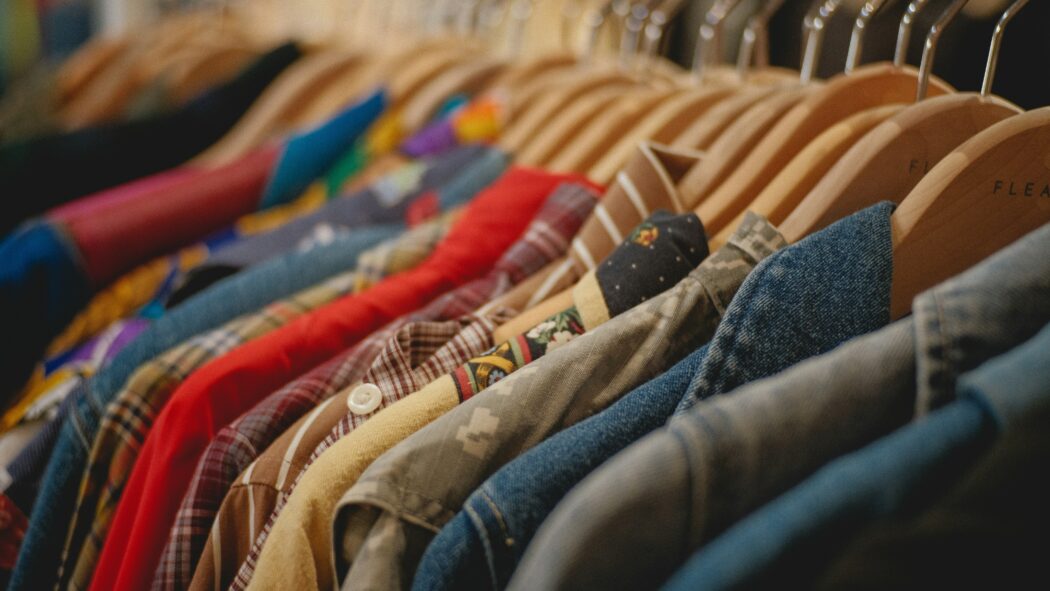
A recent trend dominating runways and social media has been the purchase of “investment pieces” rather than buying from fast-fashion companies to follow micro-trends. Neutral tones, clean tailoring, and re-wearable silhouettes indicate a shift from impulse-buying to rational purchasing as consumers are becoming more cautious about their spending. Prioritizing the longevity of purchases – both stylistically and physically – and growing search trends for “capsule wardrobe” and “minimalist outfits” show people slimming down excess. This signals declining discretionary spending, increasing financial anxiety, and an emphasis on durability over novelty.
There has also been a boom in resale and second-hand markets. In fact, McKinsey has identified resale as a top growth segment in 2025, with the resale market expected to account for 10% of the global apparel market now in 2026. This market is projected to reach 350 billion dollars by 2028, with a compound annual growth rate of 12%. In fact, the well known resale platform, Vinted, reported in April 2025 a 36% increase in revenues to over $926 million, with net profit up 330%, and in May it became the leading clothing retailer in France by sales volume. Consumer preferences shifting to circular fashion, pre-owned luxury, and rental models reflects the reduced stigma around wearing second-hand, and a desire to save money in our current era of high prices. Resale is no longer niche, but an essential economic strategy.
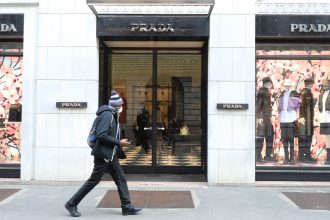
Additionally, we have seen an increase in quiet luxury and a decline in flashiness. “Stealth wealth” aesthetics–tailored coats, fine knitwear, and camel tones–surge when consumers want to convey stability without ostentation. According to 2025 analyses, high-income shoppers are pulling back from logo-heavy items, opting instead for discreet quality. This is classic downturn behaviour: subtle status replaces loud consumption.
The Fashion Economist has also reported a rise of “office-siren minimalism”, with both streets and runways showing pieces with structured tailoring that transition seamlessly from morning reports to evening events. Consumers want fewer pieces that accomplish more, mirroring a life shaped by efficiency and macroeconomic pressure.
This new economic landscape is not only reflected by fashion trends, but is reshaping business operations for fashion companies entirely. According to The CFO’s November 2024 analysis, fashion companies are entering a period of muted revenue expectations, operational complexity, and sustained cost pressure. Brands anticipate low single-digit growth, a stark shift from post-pandemic demand spikes. The annual State of Fashion report by McKinsey & Company and Business of Fashion (BoF) reflect this:
over 80% of fashion executives in 2025 expected demand to stagnate or decline in the year ahead due to cautious consumer behaviour.
For many brands, this means rethinking their value proposition. With consumers scrutinizing every purchase, companies are shifting from volume-driven strategies to loyalty-based ones. Instead of relying on trend churn, they are prioritizing transparent pricing, ethical sourcing, and tighter inventory management to avoid costly overproduction. We are also seeing more cross-industry collaborations, as fashion integrates with wellness, tech, and lifestyle branding to diversify revenue and meet consumers’ desire for multifunctional products. These shifts aren’t simply aesthetic or operational adjustments; they represent firms actively adapting to a world where economic uncertainty is the norm rather than the exception.
Ultimately, the convergence of fashion and economic behaviour shows us that what we wear is not just frivolous, but can be applied as data. It reveals how willing consumers are to take risks, how optimistic they feel about the future, and how they navigate financial strain in real time.
While economists turn to inflation data and market forecasts to interpret the moment, we cannot forget that fashion provides something equally valuable: a visible, human-centered narrative of adaptation.
In many ways, observing emerging trends offers a more immediate and intuitive understanding of our financial reality. It reminds us that the economy is not just measured in numbers, but lived through everyday choices.