
Over the summer, I worked in a restaurant and truly learned what it means to be a piece of meat. If I wasn’t being harassed about the way a steak was cooked, I was doing all sorts of odd jobs you don’t immediately consider when you think of working in a restaurant—refilling soap containers, polishing wine glasses, and bringing out booster seats. What was an experience that turns rich kids into communists also presented another point of examination: the food.
On many occasions, I’ve been asked the question “If you could only eat food from 3 cultures, what would they be?”. The seemingly obvious answer is a mix of one Asian, one Mediterranean, and one wild card option (Indian, Italian, and Mexican, as an example). When I’ve answered this question, being the contrarian that I aspire to be, I’ve always answered that my top pick would have to be American cuisine.
American cuisine, love it or hate it, is what happens when a colonialist, a globalist, and a capitalist “butter up”. Food courts where “Chinese” and “Lebanese” food stalls sit right next to one another seem simultaneously the nightmare of the pretentious “purist” and the mark of a world so culturally exploited that even the British have their reservations. Of course, these kiosks don’t really offer “Chinese” or “Lebanese” foods—ask anyone from a country (or a continent) not known for its bloodlust for profit, and they’ll tell you, “It’s not really what we eat back home.” No Mexican in their right mind considers Taco Bell to be “authentic” Mexican food. That’s why it’s American cuisine: it’s the unholy stew of colonialism (appropriating culinary practices), globalism (fusing of multiple culinary traditions), and capitalism (taking your new culinary Frankenstein, packaging it up [or down into fast food] and selling it to the world). Yet, dare I say, American cuisine is amazing. All of it.
Talking of fast food, when I was younger, my mother (wanting to instill healthy habits in her young kids), would encourage us to “shoot McDonald’s” as we often drove by. I don’t know how to fully describe it other than this: “Hey kids! Pretend you have guns and imagine you’re obliterating that profane building of excess grease and culinary poverty!” Looking back, I cringe. The point was noble, though, because it demonstrates my mother’s intentions and the assumptions underlying those intentions. She intended for us to have a negative view of fast food, because pragmatically speaking, associating McDonald’s with me shooting at it should result in my desire to not enjoy their food.
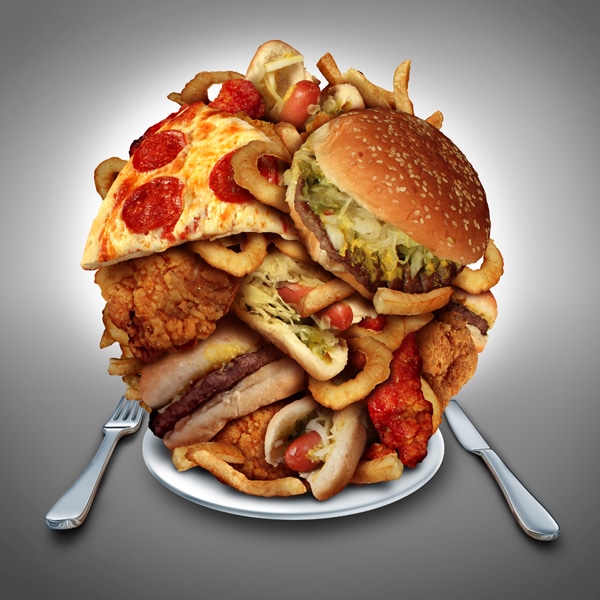
However (un)successful her programme was—I sure do love chicken nuggets—we can still argue a further point about my mother’s thoughts. America’s proliferation of food styles and quality has inevitably resulted in many people associating American cuisine with being unhealthy. When I answer the peoples’ question and say that I would pick American cuisine, I am met with judgment and pity. In their view, I’m an idiot, but also, I must not know any better (after all, how stupid must I be to hold such an opinion?). Elitist bullies.
They may be bullies, but “they” seem to have fair reason to judge. America’s obesity rate hovers around 40%, and including the overweight population into our calculations, only 1 in 3 Americans isn’t “fat.” But we also shouldn’t think that 1/3 of Americans are healthy. Take me, for example. I’m not fat, but my overconsumption of chicken nuggets in addition to my crippling caffeine addiction is cause enough to suggest I’m probably not all that healthy. The point’s clear. It deserves all the sour glances it receives, because American cuisine entails fat (sick) people.
Alright, I’ll take your point. American cuisine entails sickness. But would Americans really be so fat if their food wasn’t delicious? Is it not somewhat of a naive argument to suggest that the mark of a cuisine’s worth is in its metric of health? By that logic we should all say that we’d be more than content to live a life of spinach paired with only the finest (unseasoned) chicken and rice. God forbid I raise my blood pressure and sprinkle some salt.
So yes, you’re damn right: Americans are the fattest people on earth. But let’s not be so cynical. A little chub means yummy grub! St. Louis-style ribs, Doritos Locos Tacos, Butter chicken Pizza; these are marks of a sophisticated culinary tradition. I won’t be so dense as to forget the malicious underlying factors of America’s obesity crisis, yet it would be wrong to conflate socio-economic factors driving this epidemic with the idea of “American Cuisine.” Let’s not forget that every culture’s cuisine is marked, in some way, by the sins of their ancestral chefs. I need not mention how the British came to discover the meaning of seasoning; how the Italians found out tomatoes make for a great sauce; or how the Belgians could afford to make such rich chocolates. For the French who, as always, believe they are God’s chosen few: I need not discuss the sins of your colonial past. Never mind your arrogance and never mind your obsession with “fine dining.” Your culinary tradition is just less seasoned Italian food.
Putting my ad–hominem attacks aside, let’s come back to my job back home. One of my many perks was buying expensive steak dinners for dirt cheap. Using my parent’s credit, I gorged myself. In my defence, they gained the points, and gluttony isn’t a sin until you’re done growing. What I’ve come to realize, however, is that if only considered by the food, a steak dinner may not fully be American cuisine. When we ask ourselves the question and come up with various answers to show how “cultured” we are, we’re really only picking cuisines as they exist in North America. We’re not just picking the “buttered up” version, because it’s not just the food itself that can belong to a culture’s cuisine. Why, when, where, and how we eat; all are considerations when we discuss what belongs to a culture’s cuisine. I’m no culinary sociologist, so I’m not going to describe it to you. You’ll just have to take my word for it.
So, I ask you: if you could only eat from 3 different cuisines for the rest of your life, what would they be? And why would one of them not be American? How about we talk it over with cheeseburgers in one hand and deep-fried butter in the other?