When the United States froze Moscow’s dollar reserves following Russia’s 2022 invasion of Ukraine, it sent a message out to the world that American control over the dollar can be used as a weapon. Amid American policy uncertainty and rising geopolitical tensions, countries have accelerated efforts toward de-dollarization.
Therefore, while the U.S. dollar is currently the world’s foremost reserve currency, is it doomed to lose this status?
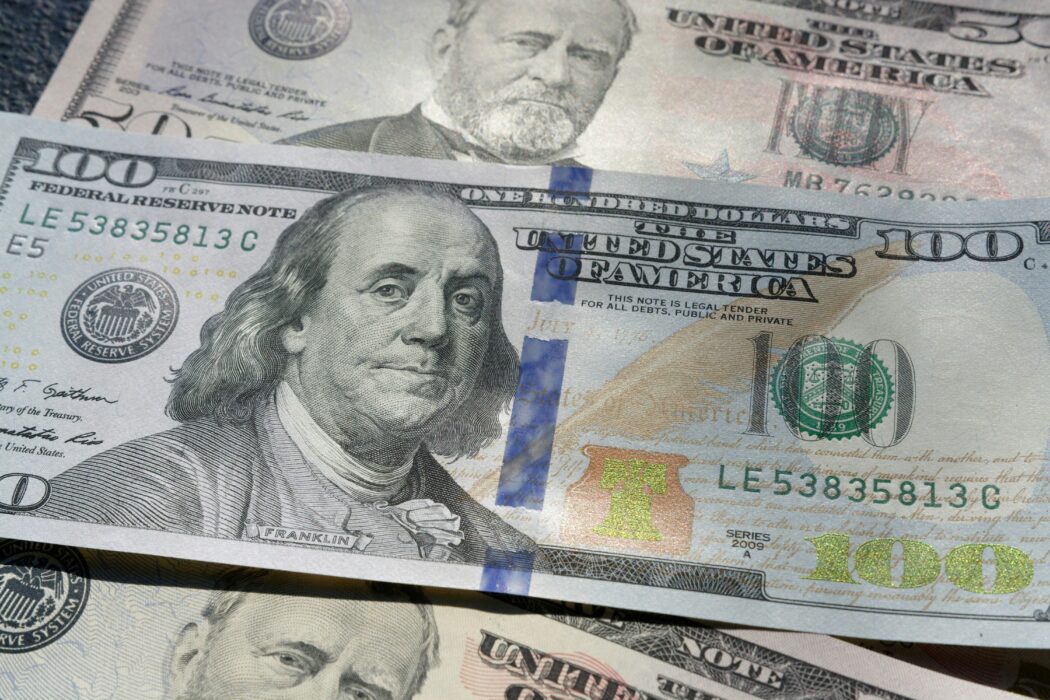
A reserve currency is the currency most commonly used during international transactions. Historically, they have largely been European currencies, namely those from England, France, and Spain, who backed their currencies materially with valuable metals like gold and ideologically with confidence in their imperial legitimacy. However, after WWII, the U.S., being oceans away from the major conflicts, was essentially the only functional economy. So in 1944, the U.S. dollar was formally designated the world’s reserve currency during the Bretton Woods Agreement, and it was backed by its gold reserves, which were the world’s largest. But that gold standard was dropped in 1971 during Nixon’s presidency, and from then on the dollar was backed by the full faith and credit of the U.S. government. Recently, there have been calls for the end of the US dollar’s status as the world’s reserve currency. However, this would be a formidable change; between 1999 and 2019, the dollar accounted for 96% of all international transactions in the Americas, 74% in Asia, and 79% in the rest of the globe.
The U.S. dollar has retained its global status due to the fact that the majority of the world’s oil transactions use the dollar, creating steady demand due to universal energy needs.
De-dollarization, on the other hand, is the significant decrease in the use of U.S. dollars in the world financial system.
After the freezing of Russia’s dollar reserves and Trump’s tariff war and isolationist policies that sent shockwaves through America’s allies, countries have been prompted to reduce their reliance on the dollar. Nations like China, India, and Brazil are considering trading in their own currencies, leaving out the U.S. dollar. They are also part of BRICS, a group of major emerging economies that has previously considered the idea of using a separate currency to conduct trade with one another. China has been one of the biggest players in de-dollarization, as it is quietly reducing its stake in U.S. Treasuries while simultaneously stockpiling gold. Its official holdings dropped to $682.6 billion by the end of 2025, the lowest level since 2008. China, one of America’s largest creditors, has grown increasingly concerned over the political risks of dollar dependence after the freezing of Russia’s dollar reserves. Furthermore, a trade war with China during Trump’s first term and a global tariff war in his second term have only added to these concerns. The U.S. Dollar index has dropped 9.5% in the past year, but was up 9.2% overall the past five years. This may reflect Trump’s aggressive trade policies or declining confidence among global investors in the American economy. However, luckily for Americans, there is no viable alternative to the dollar yet. The 2008 financial crisis and other shocks have weakened the European currency; Japan has a stagnant economy and a shrinking population; and China’s government has too many capital controls on the yuan. Other alternatives, such as metals and cryptocurrencies, have their own problems, like liquidity and scalability.
Ultimately, the reign of the U.S. dollar is entering a more fragile, transformative chapter, where its status as an undisputed financial anchor is being tested by both internal and external shifts.
De-dollarization currently looks less like a revolution and more like a slow, strategic diversification. Until a rival, be it a digital currency or a reformed yuan, can offer the same level of global trust, the dollar will remain the world’s “least bad” option.
The real question isn’t whether the dollar will vanish overnight, but how smoothly it can transition from a global monopoly to one among many in a much more fragmented, multipolar global economy.