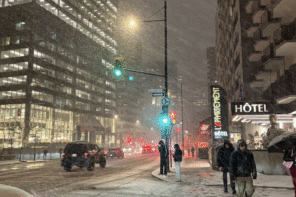

While many Canadians are familiar with the physical and emotional strain of long winters—from injuries caused by icy sidewalks to increased seasonal depression—less attention is paid to the financial costs major cities face. Montreal, for example, invests heavily in salting, plowing, and other winter operations.
The question remains: what is the true financial impact of winter on urban centers, and how sustainable are these costs for city budgets?
As news outlets report, Montreal will spend nearly $200M on snow removal as cost of labour and machinery rise across Canada. Due to Montreal’s huge snowfall each year and its many small streets, the city runs one of the largest snow-clearing operations in the world, clearing almost 10,000 kilometers of road, bike paths, and sidewalks. However, as prices continue to increase and budgets decrease, there is less money allocated to these operations, leading to increased taxes in some areas of Montreal. In contrast, most other major Canadian cities generally spend less on snow removal and salting than Montreal. Toronto, for instance, typically receives less snow; Quebec City receives similar levels of snowfall but has a different city layout that affects the operation’s scale; and Calgary, while known for colder temperatures, has wider streets, which influences both the snow removal process and its cost.
Additionally, there have been shortages in labor and parts in Montreal. Previously, parts used in snow-removing trucks were coming from Ukraine, but there has been a shortage in recent years due to disruptions in supply chains, leading to the rapid growth in prices for these parts. Climate change also poses an ever-growing problem for Montreal. Although there may be less snow in recent years, the rise in temperatures has caused thawing and refreezing, which means that the city must clear ice more regularly to prevent blockages and potential accidents. Montreal receives around 200 centimeters of snow each year, but due to climate change, the snowfall is now concentrated in January-February instead of spreading out from November-March. This has caused plow companies to have to increase the number of employees and trucks needed. The market for snow clearing is also relatively less competitive than other industries, so companies have more freedom to inflate prices.
Due to Montreal’s dense street grid, there is often no place to pile snow, and it cannot be left to melt, so the snow not only needs to be plowed but then also transported to one of more than 20 dumps around the city. The dumping of snow can disrupt local soil and waterways, contaminating the local ecosystem with chemicals, oils, and other foreign matter. Salting is also a huge component of snow clean-up, contributing to effort, cost, and the environmental impact.
Canada alone uses about 7 million tonnes of salt on their roads, equivalent to about $350 million dollars, each year.
Salt can age the roads and paths that it is used on, as well as contribute to damage to buildings around streets and cars that drive on it; all causing an increase in damage that may need to be fixed come spring.
Despite salt having been used for decades, as Montreal attempts to be more environmentally conscious, it has started using gravel to create abrasive surfaces to prevent ice from being as slick. The use of gravel is also necessary as melting salt can lose its effectiveness in temperatures below -15 degrees Celsius, which Montreal experiences frequently. The mix of salt and stones has not only mitigated some of the environmental impact of snow removal operations, but also allowed for a melting ability with traction. Some cities in Quebec have also experimented with other alternatives, including wood chips in place of gravel, and beet juice, which is shown to make salt’s melting capabilities effective in up to –30 degree weather.
Despite all these efforts, many Canadians are still not happy with the snow removal efforts of their cities. Some believe there is a favor for clearing bike paths instead of streets, while others believe that on the days it does snow, the snow isn’t moved efficiently enough. Some also argue that there are delays in the clearing of snow in lower-income areas. Overall, failure to remove snow and salt the roads, sidewalks, and bike paths can result in accessibility issues for many, including the elderly, people with disabilities, and other residents, leading to potentially dangerous accidents.