Caroline Bassette-Kennedy, a public figure from the 1990s often associated with minimalist understated fashion, seemed effortless. That was the point. A slip dress, a clean line, hair pulled back like an afterthought, and yet the whole world watched.
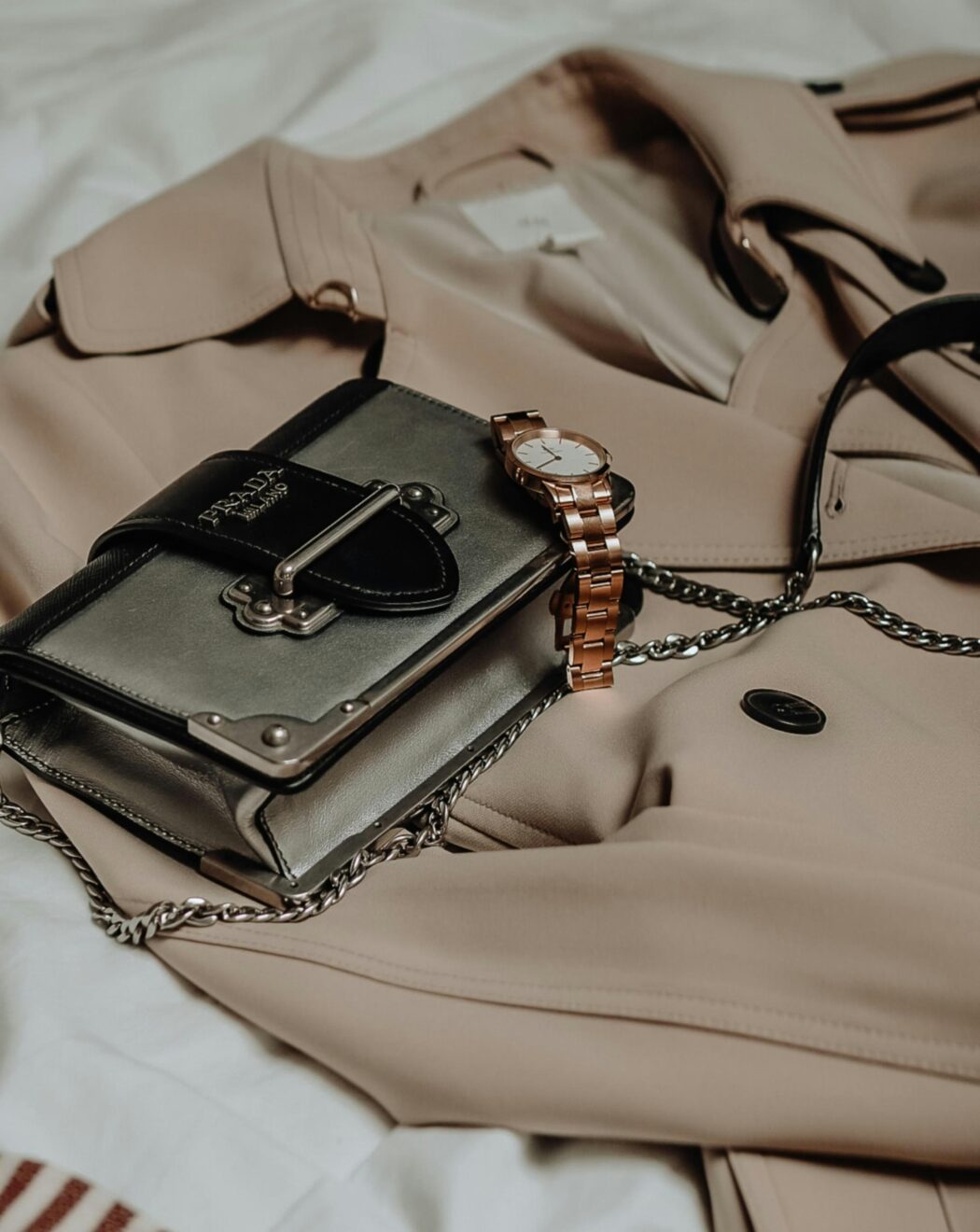
Today we call what she embodied quiet luxury, a term originally exclusive to the fashion niche that later evolved into a cultural shorthand for a very specific kind of aspiration. Quiet luxury describes a way of presenting oneself that avoids excess: minimal, slightly undone yet in control, neutral in color, and timeless. It also makes a statement, often leaving out visible branding, instead placing the value in the garment’s construction. This often looks like a focus on proper tailoring and clean lines. Even widely recognized status items such as the Hermès Birkin bag fall under this category, because each bag’s handcrafted construction signals exclusivity through its minimal design. However, in order to embody such an aesthetic, one must ask a more uncomfortable question: what does it take to actually be that quiet?
To answer this, we must look beyond the wardrobe and move within ourselves.
Why? Because the stillness that sells quiet luxury has a price that no retail tag has ever been honest enough to print.
So what does luxury say about the child on the inside? Everything. It says what they were given, what they were denied, what they learned to perform, and what they’re still reaching for. A child enters the world sometimes in the most luxurious state of all, unburned, unbranded, unaware that the world has a price tag on almost everything including stillness itself. However, childhood is never equally quiet for everyone. For some it is the loudest season of their life. Trauma has a way of living in the body long after the moment has passed, arriving uninvited in the silence, in the stillness, in the very spaces that quiet luxury promises to create. This is where consumption comes in as a cover-up. We reach for the bag, for the blazer, the thread count, the ritual of the thing to cover up something far more tender: the desire to give our younger selves what was lacking. To construct on the outside the safety that was never guaranteed on the inside. The Birkin has no idea of your story. But you brought your story to it.
And that’s where the real cost lives, in what you were hoping a purchase would finally fix.
Yet brands, more today than ever, understand this consumption pattern better than they let on. They understand the sell of relief, the power of a perfectly weighted fabric, a sleeve that falls just so, a palette that asks nothing of the room. These brands are selling the exhale. The Birkin operates the same way, leaving out everything flashy and instead commanding attention through the quiet authority of an item made to last. Some brands go a step further, pulling it all apart at the seams, completely reconstructing the basics of a wardrobe, asking who gets to be included in the conversation at all. These brands have done something remarkably savvy. They have aestheticized the interior calm that some people were simply born into, bottled the stillness of a certain kind of unbothered childhood, and placed it on a shelf with a price attached.
They are selling cashmere or leather, but they are also selling the feeling of already having arrived somewhere peaceful inside yourself. The tragedy and the genius of it is that the people who need that feeling the most are the ones for whom no purchase will ever fully deliver it. Yet the concept of quiet luxury goes beyond the material. This is not to ignore the material realities that shape access to comfort and stability, but to recognize that even within the constraints, the internal relationship between what we have and what we seek still matters.
The most overlooked luxuries live in the immaterial: the ability to choose, the permission to step away, the gratitude for a life that is genuinely priceless, the gift of waking up to a day completely unwritten. These are the things we push aside to operate on autopilot, moving through our habits, our routines, the familiar weight of who we’ve always been. And yet they are everywhere, staring back at us in the choices we make and the objects we surround ourselves with, our internal lives quietly emulated in everything we reach for.
The object alone can’t do the interior work. It never could. The person who wears a “quiet luxury” item and the person who can’t afford it can be both equally rich or both equally empty inside. What sits between them is not the price tag. It is the work they have or haven’t done on the inside.
Perhaps luxury was never about the object at all, but rather reaching a point where you no longer feel the need to buy something to resolve what’s within yourself.
It lives in the quiet recognition that what once felt unsettled and messy was never a personal failure, but something carried and learned over time. And the most luxurious thing you can do, more than any bag or physical item, is to set it down. To give yourself the stillness that was never guaranteed in the first place. A decision made quietly, deliberately, without a logo in sight, one that says you have already arrived. That is luxury no brand can bottle and sell. That is the quiet that was yours all along.