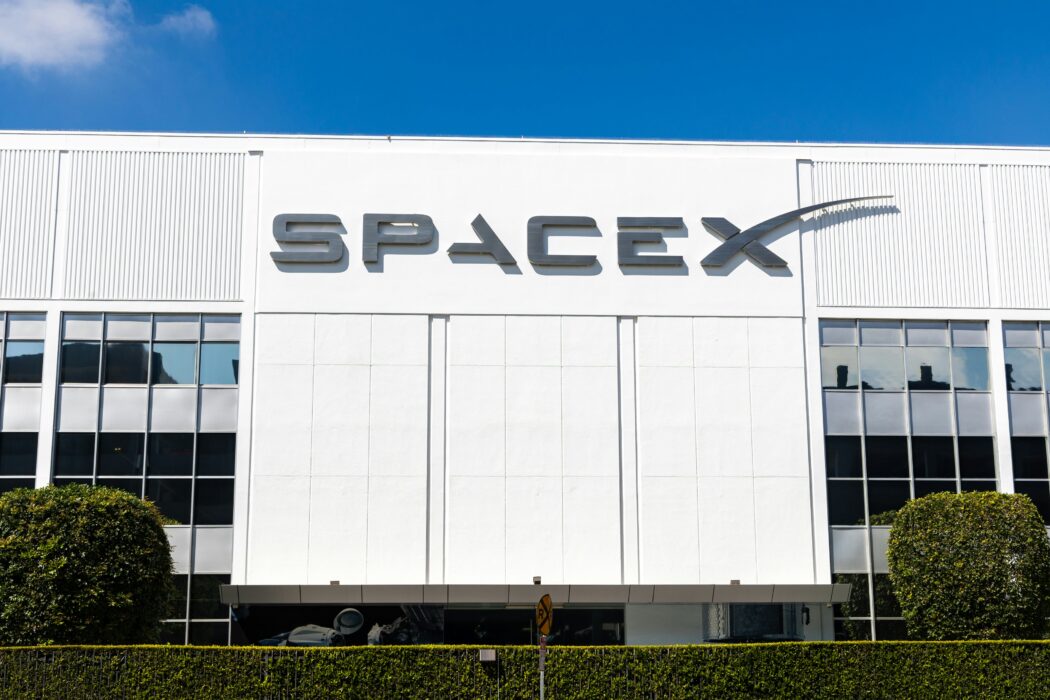
SpaceX and Elon Musk are eyeing an IPO amid a strong IPO market and amid a record valuation of his record breaking space company as well as his new goal of developing data centres in space. Elon is also the founder of xAi, a company which prides itself on developing the most innovative AI solutions and developing artificial general intelligence.
Recently, SpaceX acquired Elon Musk’s AI company xAI in early February 2026 in an all stock deal in what multiple outlets confirm is the largest merger in history, valued at $1.75 trillion. It comes directly ahead of the potential blockbuster IPO of SpaceX later in 2026. Musk stated the merger’s purpose was to build “orbital data centers” which are AI compute infrastructure in space. It may also help explain theIPO, since selling a large portion of equity on the public markets would give SpaceX the capital needed to pursue this ambitious dream. This merger also adds to the incredible hype around SpaceX, combining the company’s existing upside with that of xAi, whose valuations and revenue projections have continued to rise. This IPO has the potential to become the world’s largest IPO since Instagram.
However, the current valuations that are attributed to the joint SpaceX entity warrant both fear and further investigation.
Before the merger, SpaceX was valued near $1 trillion in private markets. xAI had rapidly grown to a valuation in the hundreds of billions, and since the merger with SpaceX the valuation of the combined entity could fetch on the public markets a valuation as high as $1.75 trillion. Other analysts suggest the IPO could even track as high as $2 trillion, depending on market conditions and the integration of AI‑driven capabilities. The merger is a dramatic escalation of Musk’s IPO ambitions, creating a vertically integrated ‘mothership’ combining aerospace, satellites, and AI. One strategically important consideration in this deal is that xAi models will be running in space via Starlink infrastructure. This will be realized via AI‑enhanced satellite networks that optimize for global coverage as well as autonomous space systems such as AI‑driven spacecraft operations and mission planning. SpaceX’s access to global satellite data and the inclusion of Musk’s Twitter database provide the ultimate real-time training database for xAI’s models. The combined entity therefore creates a company that spans data, space launch and rocket manufacturing, satellite and internet services and social media. This is a conglomerate in the true sense of the word.
The merger is widely interpreted as preparation for a record‑breaking IPO. CNBC confirms the merger “comes ahead of a potential blockbuster initial public offering for SpaceX later this year. While analysts expect the IPO value to be around $1.25T to $1.5T, these figures could potentially skyrocketed much higher than the presupposed value ceiling of 1.5T. The investor appetite is simply so high especially for a company that combines two of the most prominent and fastest growing industries in Space and Ai.
There are several risk factors associated with an IPO of this size. It would constitute the largest IPO to date in the public markets. Notably, Musk’s plan to take AI off‑planet may conflict with investor expectations for near‑term returns. The nosebleed valuation also brings a lot of skepticism. The mechanics behind the deal reveal that the valuation could entail an IPO multiple of close to 77x Price to Sales.
This means that to buy SpaceX at its IPO, you would be paying for 77 years of forward revenue.
This is both incredible and hard to fathom. The revenue of the company breaks into two categories; Xai, which has about 120M in revenue and SpaceX, which includes Starlink and has a yearly figure of 16B. For context, when Mark Zuckerberg took Facebook public, the Price to Sales ratio was 28x. However, there is some reasoning for this; at the time, Facebook’s IPO was unheard of, and its market cap was approximately one quarter of the size of the largest firm at the time, which was Exxon Mobil. Today the largest company in the market is Nvidia, which has a market cap that is approximately 4 times that of the projected SpaceX IPO. So, history has shown these valuations can sometimes make sense! However I fear that history may repeat itself, as after one year, Facebook’s stock was down 30% amid sky high valuation concerns. The same may be in store for SpaceX.
At its core, this IPO is a true testament of Elon Musk’s incredible personability and ability to not only convey a vision, but to also get people financially on board with it.
Given this, my recommendation would be to read the data presented in this article, and do your due diligence before jumping into such a highly valued company. There is no denying how convincing Elon may be, especially when he promises us the moon and the stars. He remains one of the most critically acclaimed visionaries of our time and has demonstrated his amazing skill at collectively bringing people toward an unrealistic, and almost unachievable, goal.