By the time my friends and I arrived at Locoshop Angus on September 26, a line had already formed outside. We had come for Collectif Créatif MTL’s Marché d’automne, but apparently, so had half of Montreal. Luckily, the line moved quickly. Since the market was indoors, people were admitted gradually to prevent the space from getting too crowded.
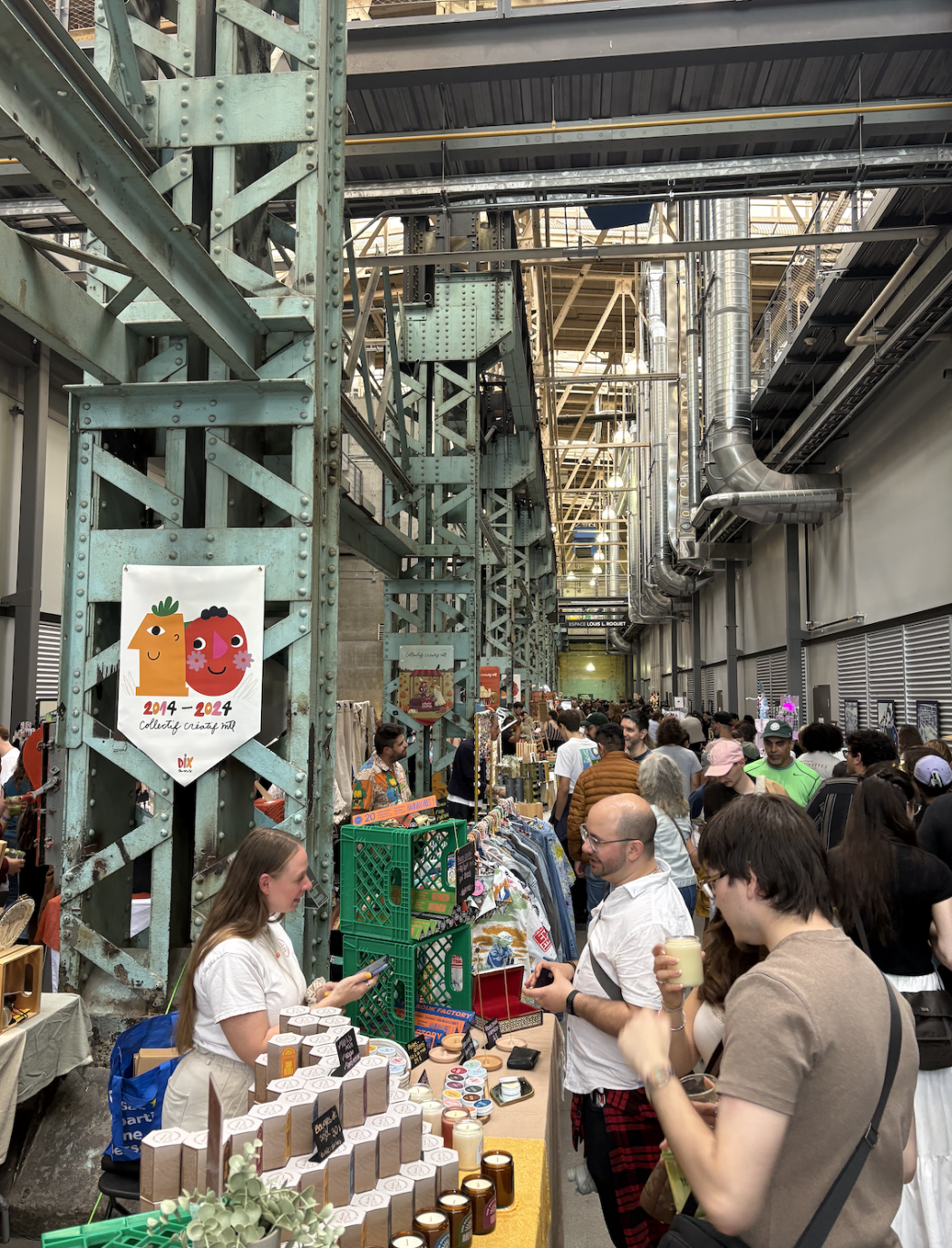
Once inside, it was easy to see why so many people had shown up. The massive industrial space, with its exposed steel structures, had been transformed by rows of colorful booths. More than 100 local creators were there that weekend, selling everything from ceramics and jewelry to clothing, illustrations, candles, skincare, and food. At first, it looked like a really big craft market. But after spending the afternoon there, it started to feel more like a snapshot of Montreal’s creative scene.
What I liked most was that it did not feel like a typical shopping experience, where you rarely get to meet the person behind what you are buying. At many of the booths, the person selling the product was also the person who had made it. Instead of reading a brand’s “About Us” page online, you could simply ask the person standing in front of you. Many were happy to explain how they started, how they made something, or the story behind their business. It made discovering new brands feel much more personal.
We sampled jerky as we walked around and eventually joined the crowd at Whiské Matcha, where our drinks were whisked and prepared right in front of us. Somewhere between the jewelry, art, and clothing, we also came across a booth selling themed press-on nails—including McGill designs. The vendor told us they had only recently received permission to make them, which felt like a funny little piece of campus life showing up far from campus.
By the time we reached the vintage pop-up near the end, we had passed ceramics, crochet, illustrations, skincare, food, clothing, and more. Very little of it had much in common, except that it had been brought there by independent creators. And that variety seemed to show exactly what the market was about – bringing different parts of Montreal’s creative community together.
There was also more to do than browse the booths. During the first weekend of Marché d’automne, visitors could sign up for creative workshops hosted by FLOW Boutique Créative. These included eco-resin crafting and textile painting, where participants could make their own tray or coaster and personalize a tote bag. The workshops fit naturally into the rest of the market. Creativity was not just something to look at or buy; visitors could try it themselves, talk directly to the people making the products, taste what they had created, and learn a little about the process behind it.
Before going, I thought of a creative market mostly as a place where local businesses sell handmade products. But what stood out to me was how many different parts of Montreal’s creative community came together in one place. Artists, designers, food makers, vintage sellers, and small business owners were all sharing the same space, even though their work had very little in common. A jewelry maker was set up next to someone selling cookies, while a clothing designer was only a few booths away from an illustrator. The market brought together people who would normally be working in separate studios, shops, or neighborhoods across Montreal.
And this sense of community is not limited to one weekend.
Collectif Créatif MTL has been organizing markets in Montreal since 2014, when it started as Etsy Montréal. Today, it brings local creators together through different markets throughout the year.
Even the Marché d’automne we visited took place over two weekends, September 26–27 and October 3–4. More than 100 local creators participated each weekend, and the lineup changed between the two weekends. This meant that returning one week later could lead to discovering a completely new group of local businesses.
The same idea continues with other seasonal markets. Collectif Créatif organizes events throughout the year, including spring and holiday editions at different locations around Montreal. Rather than being a single annual event, the markets continue to provide local creators with a physical space to showcase their work and meet people interested in it.
Nowadays, we find a brand through Instagram or TikTok, scroll through its page, and maybe order something without ever knowing much about the person behind it. At Marché d’automne, that process was almost reversed: we met the people first. You could ask someone how they started making jewelry, try food before deciding whether you liked it, watch a drink being prepared, or pick up something handmade and hear the story behind it. Even if you did not buy anything, you could still leave knowing more about the local creators behind the products.
For students, especially those of us who are not originally from Montreal, markets like this are also an easy way to step outside the McGill bubble. It is possible to spend most of your time around campus and downtown and still feel like you know the city. But Montreal’s creative scene stretches much further—across small studios, online shops, neighborhood businesses, and the people behind them.
We went to Locoshop Angus expecting a nice Saturday market and maybe a few local products. We left with matcha, several new businesses to remember, and a better idea of just how much is being created around us. Maybe that is what Collectif Créatif does best. For a few days at a time, it takes pieces of Montreal’s creative scene that are normally scattered across the city and puts them all in the same room.