
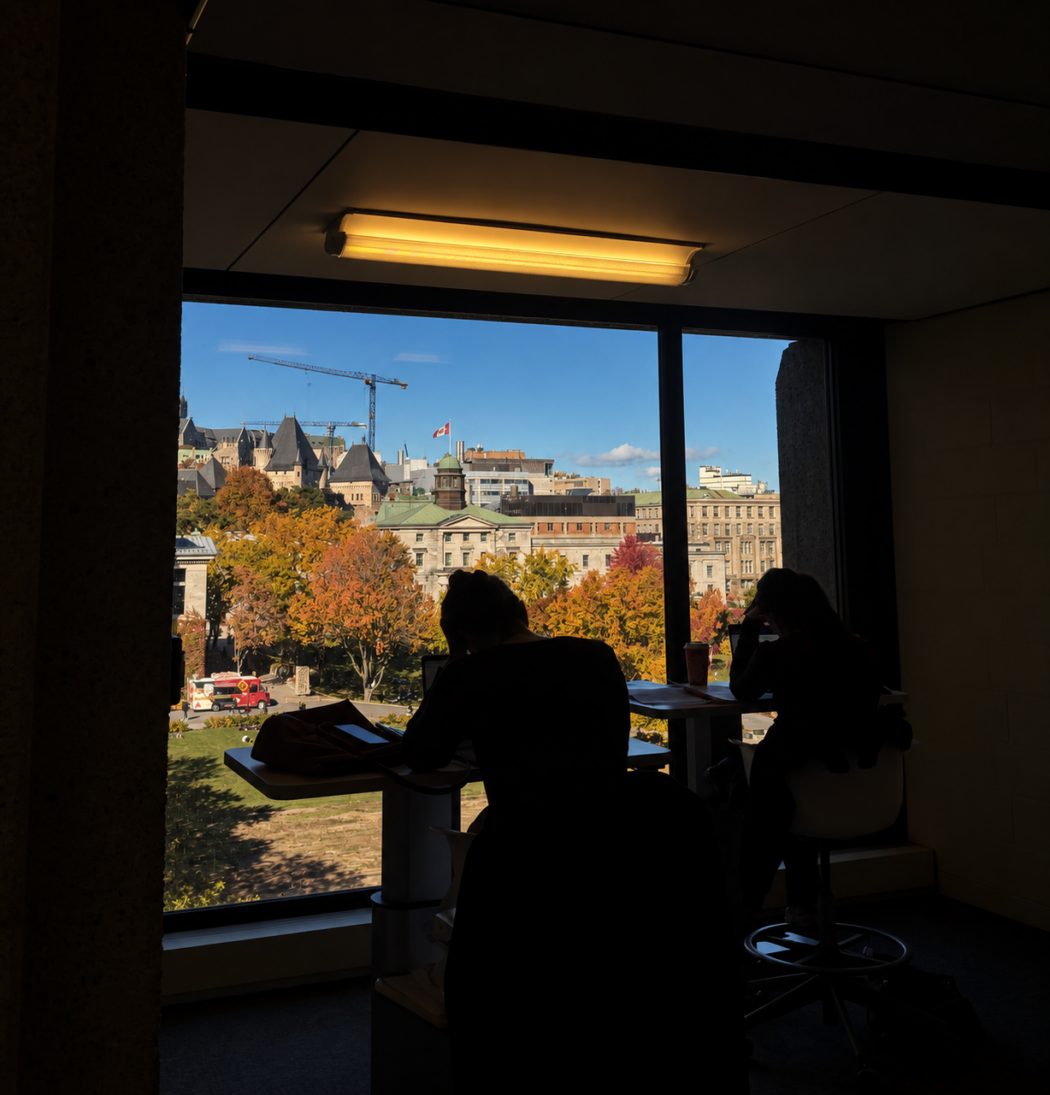
“My parents met at McGill” is what I’ve heard from several of my friends when I’ve asked them where their parents met. Whether in clubs or shared classes, their love story’s origins are endless and tender. Alas, the campus air feels different now. What once seemed to be an environment fostering the search for long-term connection has now become a campus hosting temporary bonds and none other than the infamous situationships. I can’t tell whether the McGill student population just isn’t interested in finding their long-life swan because of the traditional association, or whether ambition and competitive drive reject the thought of seeking partners. But it begs these questions: do we find love and relationships too time-consuming for our corporate pursuits? Has university life normalized transient connections because they’re easier to deal with? How can we genuinely define the current state of love life on campus?
Many people label relationships as complex bonds that sometimes require more than many university students can offer: emotion and thought. In an environment where grades, networking, and extracurriculars matter most, deep or complicated love seems like a low priority. When we focus heavily on nailing that coffee chat, getting an internship, or acing that exam, dating and love seem to fall by the wayside.
Without a doubt, the world has become increasingly competitive, leaving students uneasy and stressed. We seek only temporary pleasures, and while we may benefit in terms of time management, our emotional well-being suffers as we attempt to excel in our ambitions. It feels as if emotions and ambition can not coincide. We’re not busy thinking about another person because we know we should be focusing on our studies. In fact, one of my friends deletes her dating apps once the school year rolls around, claiming she’ll be too busy for any sort of deeply passionate relationship. She prioritizes her education and extracurriculars, aspiring to become a lawyer. Maybe we’ve overcomplicated emotions, or maybe we’ve created an environment that feeds obsessively striving to be the best.
Another answer to my questions may be that we currently exist in a culture that rejects traditional senses of romance. Two individuals fall in love and become long-term partners is how the story typically goes; you find your mate for life. Yet, today young adults seem to be embracing this less and less. When I mentioned the idea of dating to marry in a group setting, I got weird stares and opposing opinions. Instead, they claimed we were too young to date to marry, and this was the time to “have fun.” Moreover, this begs the question: Are we pushing away deep and long-term connections because it’s an “outdated” concept? Is this our way of encouraging change? In other words, what seems to be a recession in dating today can also be seen as a shift in the modern perception of romance. The laws of marriage and the taboos of hookups, short relationships, etc., have deteriorated; to embrace this form of liberation, society pursues the complete opposite. Hence, people indulge in short-term relationships or nameless agreements between one another. It’s the new normal. Oftentimes, it’s labelled as healthy and doesn’t confine us to the agreed expectations of dating: commitment, loyalty, emotions, time, and love.
The recession of love life on McGill’s campus is due to a culmination of several factors: Mainly, the intense competitive environment and the shift away from what we deem as “traditional” senses of love. We, as busy and evolved students, have reached a new normal; a “romantic revolution,” if you will. Away from the permanent and towards the temporary. While long-term relationships still flourish, many, if not most, embrace brief, easy-going relationships. That’s the beauty of university: nothing, especially the versatility of love, can ever be generalized.