
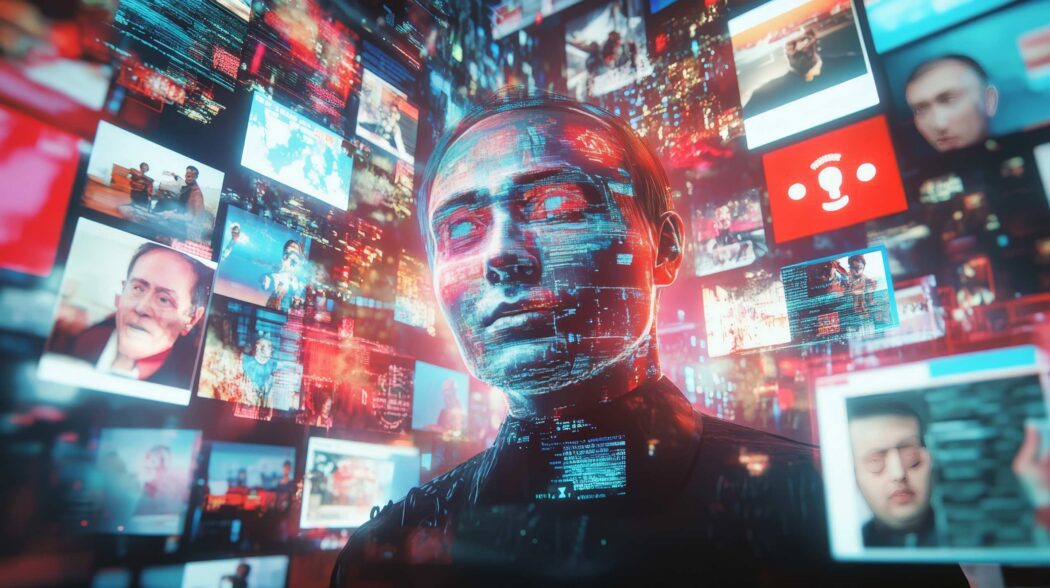
Quebec doctor François Marquis is known for providing the public with information regarding various medical concerns. When COVID-19 occurred, he assisted at the Maisonneuve-Rosemont hospital as the head of the emergency room, where he is responsible for helping those in urgent need of medical care. Dr. Marquis has explained that after the pandemic, there has been a large increase in the number of AI (artificial intelligence) deepfakes on social media. The deepfakes depict him discussing joint pain with his face in a video next to an animation of a hand with joint pain. AI deepfakes are when AI is used to create false photos and videos of an individual.
Marquis stated in an interview with CTV News that he discovered the AI deepfakes not through social media, but through phone calls from his close circle. They called to inform him that there were AI deepfakes of him circulating on social media.
What he found were AI-generated deepfake advertisements featuring him, including one where he is advertising vitamin supplements and discussing joint pain. Other videos portray him opposing the pharmaceutical industry and unethically selling false cancer cures, an article by CBC revealed.
Marquis was recently approached by a dissatisfied patient while he was working in the hospital. According to Dr. Marquis, the man went to the hospital’s Intensive Care Unit and demanded a refund, claiming he never received the supplements he had asked for, not realizing he was deceived by AI deepfakes. He also explained that it is illegal for a doctor to sell products online. Therefore, if there is a video of a physician trying to advertise a product on social media, it is necessarily a scam.
Dr. Marquis expressed his concern for the situation, worrying that doctors and staff at hospitals would lose credibility. In fact, many of the videos are encouraging viewers to no longer take the medicine they were prescribed, inevitably leading to less trust in the healthcare system. Other than informing the Montreal police and the College of Physicians in Quebec of the deepfakes generated by AI, Dr. Marquis explained that there is no further action he can take. Alerting the public about the issue is all that’s left.
A professor and researcher from the University of Alberta, Timothy Caulfield, who studies science policies and health law, says it will become more difficult to identify false videos from the truth.
At the McGill Office for Science & Society, in an interview with CTV News, science communicator Jonathan Jarry revealed that many more people’s likenesses are being used in AI deepfakes for scams— not just doctors.
And while AI technology may be evolving, there are still some ways one can tell when a video is fake and generated by AI. For example, in his interview, Jarry says that individuals need to pay particular attention to the sound of the speaker’s voice in videos to see if it seems artificial. Additionally, viewers should be wary if a person depicted is missing regular facial expressions, or if the video has a plain background. Moreover, Jarry mentioned to CTV that people should not view videos that are providing unprofessional medical advice online.
Overall, the AI deepfakes of Dr. Marquis has eroded public trust for Montreal doctors and has caused many to be deceived. Dr. Marquis has expressed the importance of exercising caution when it comes to trusting medical information provided by AI deepfake videos.