
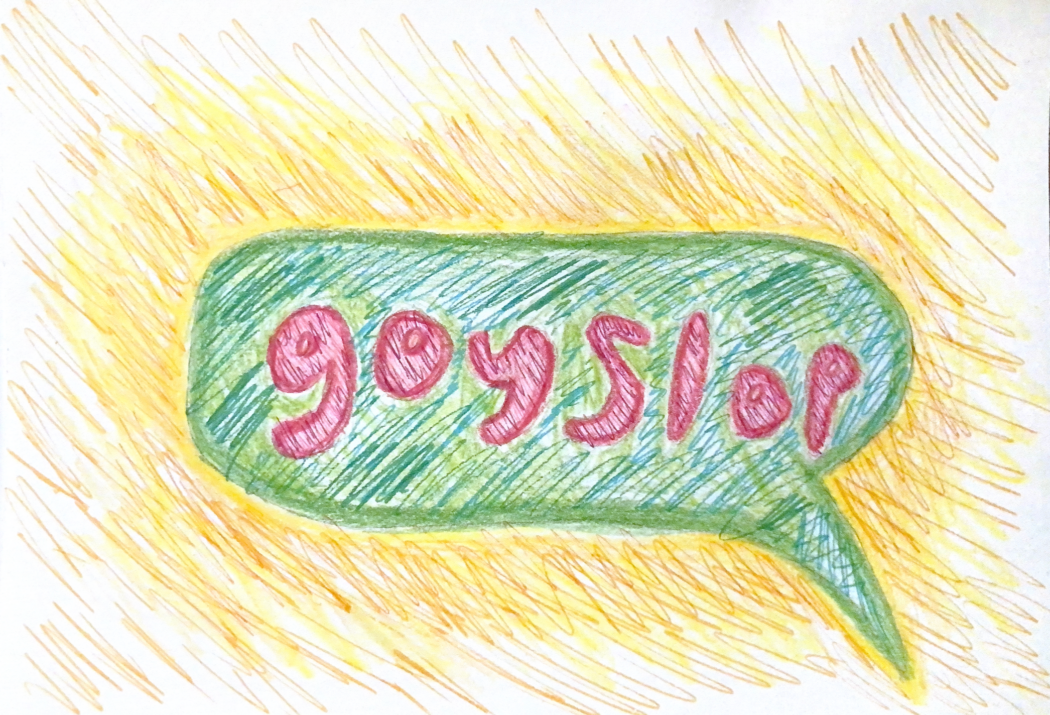
A quick search for “goyslop” on Tiktok or Twitter will lead you to a sparkling array of casually antisemitic posts. The first 3 videos that came up when I looked were content creators ranking foods they consider “goyslop” – including fast food and heavily processed foods. Creators post content about how eating “goyslop” can save money but is still ultimately the least healthy option. One creator brags that his cultural cuisine is infinitely better than “goyslop.” Another preaches that “goyslop” food is designed to weaken and tire the human body. This one sparks the unsettling question: designed by whom?
The conspiracy that Jews design and control elements of everyday public life has remained a prevalent conspiracy since at least the 12th century. One early form of this conspiracy is the story of William, a young christian child found murdered in Norwich in 1144. Accusations against Jews of murdering William of Norwich for ritualistic reasons spread across the country. This concept further developed when Jews were blamed for the Black Death in the 14th century. More recently, the Nazis and their followers yielded antisemitic libels of control to portray Jews as administrators of Germany’s post-WWI financial crisis. Particularly in Nazi propaganda, Jews were depicted as poisonous mushrooms spreading disease to children, as well as animals with disproportionate control over world affairs, education, food, and markets. Simply, Jews have always been subject to accusations claiming that they are an elite class with too much power. This ideology directly contributed to the Holocaust and many other horrific antisemitic actions throughout history; for example, Nazi propaganda frequently employed tropes of disproportionate Jewish control.
As the newest linguistic iteration of this historic antisemitic trope, “goyslop” implies that Jews control American industries as a means of weakening non-Jewish sectors. Jews have the good-quality food, and they feed the low-quality “slop” to the “goys” (meaning non-Jews). Some organizations, like Anti-Defamation League (ADL), recognize the antisemitism in the origins of “goyslop” but interpret its use differently. A tweet from Jonathan Greenblatt, CEO of the ADL, promotes the idea that “antisemites use goyslop to promote a conspiracy theory” about disproportionate Jewish control over food and markets. I argue that the danger of “goyslop” is not its use by consciously discriminatory antisemites. The internet is being used as a festering ground for blatant antisemitic tropes, and average internet users are becoming accustomed to casual antisemitism ingrained in everyday language.
Language, at its most powerful, is intentional, and personal. Words carry meaning and nuance so that they can be used in meaningful and nuanced ways. Yet we casually throw around so many words and phrases without understanding the weight that they hold. “Goyslop” is just one example. You have probably heard of the racist origins of the widely used term “grandfathered in.” This term, now commonly used in deracialized contexts, references the voting laws that prevented African-Americans from voting in late-19th century United States. Maybe you know about the problematic historical context that popularized the term “master bedroom,” another term originating directly from the context of slavery in the US.
When we are not careful, our words trivialize the living, breathing world around us. At their best, terms like “goyslop” are semi-funny memes with highly problematic histories. At their worst, these terms are frightening callbacks to pointedly discriminatory ideology.