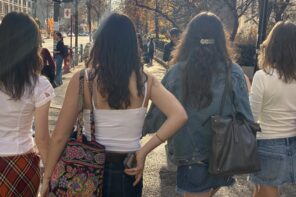
I sit in my friend Alice’s room, which is adorned with cheetah print furniture and various band posters. The waxy scent of the curling iron heating up lingers alongside the rack of various liquors and vintage handbags. Alice, who, for privacy reasons, isn’t really named Alice, shares her vanity mirror with me as we beat our faces with powder and line our lips with various hues of brown, red, and pink.
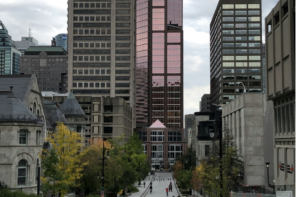
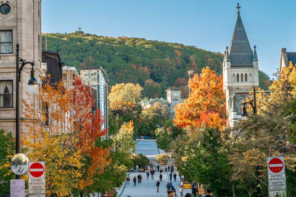
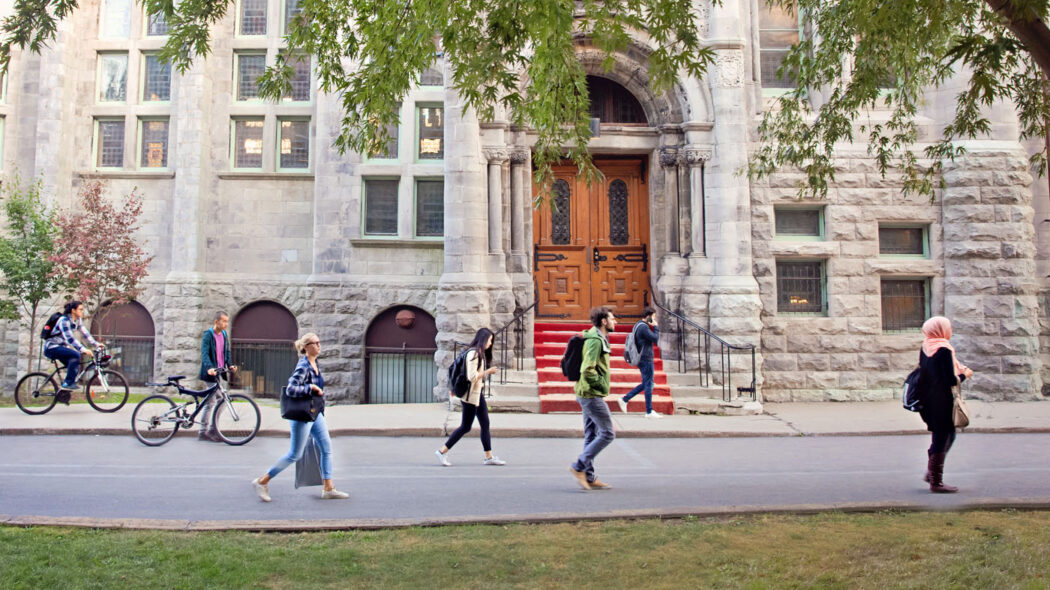
It’s a Friday night in Montréal, which for most McGill students, entails a night out on a particular strip of Saint-Laurent, starting at École Privée, and ending once you hit TRH on the other side. Some students, when craving a more posh atmosphere, will make their way down to Old Port, typically frequenting Apartment 212 or Flyjin. However, it seems that the typical ventures of McGill students come to an end at certain intersections and crosswalks, even during the day. Montréal, in the eyes of out-of-province and international students, is a hub that is bordered by Milton Parc, with occasional ‘outings’ to St. Catherine for shopping.
As an international student myself, I was admittedly an initial sucker for the nights out at Café Campus and breakfasts at Pigeon Café. However, overtime I grew antsy to disprove the long-standing stereotype of McGill students: that they largely spend their time within the ‘McGill Bubble’, and scarcely venture out into greater Montréal, or outside of student communities. Even for the sake of myself, I wanted to explore the spots and subcultures in Montréal that McGill students commonly overlook during their four years in the city. With an itch for discovering the city I live in, I grew curious. What is really out there, beyond the ‘McGill Bubble’?
Alice, an international student like me, came to Montréal with no knowledge of the city whatsoever. Also similar to me, she grew curious about the rest of Montréal, and eventually took it on herself to wander out of the bounds of the McGill Ghetto. Agreeing to take me on a day out with her, we tracked down three things: a cafe, a place for lunch, and a new part of the nightlife.
Caffé Grazie-Mille, Mile End
Caffe Grazie-Mille presents as a brick nook on the corner of Fairmont and St. Laurent, sitting with the door hanging open lazily to the aroma of ground-up espresso and soft jazz. The interior is signatured with checkered placemats and chalkboard menus, one of their notable ones inscribed with “Cannoli!” in bold orange. Open for over a decade, Caffé Grazie-Mille is known for their signature house-made Italian pastries and sandwiches. The atmosphere is cozy and calm: a hole-in-the-wall where you would go to study or catch up with an old friend. Their Nutella cookies melt in your mouth, and their hot cappuccino is simultaneously creamy with a sharp kick of pure Italian grounds.
Buboy, Chinatown
Located in Chinatown, Buboy is a Filipino restaurant with a casual atmosphere, lined with counters and stools for dining. It is moderately-sized, and with a few singular diners scattered throughout the room, the environment was casual and quiet. I tried their miki soup: a rich coconut broth with thick egg noodles and chicken. Comforting and filling, Buboy was quickly mentally noted as a place to return to.
Le Red Room, Quartier Latin
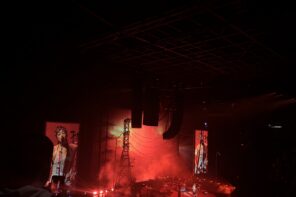
We made it to Le Red Room at midnight, where the first thing I noticed about the small venue is how the bass rattles through your body. Engulfed in darkness except for a few beams of dark red, Alice and I danced through the thuds of the harsh bass. The environment is rave-style, with the crowd being young, energetic, and decked in a variety of eyeshadow colors and platform boots. Located in the Quartier Latin, Le Red Room packs a punch on Friday nights, and is a must-see.
During my time at McGill, I constantly frequented familiar cafes, nooks, and clubs, overtime building a subconscious routine where I never felt the need to explore or try anything new. Yet, during my time with Alice, I quickly came to realize how important it is that students take advantage of the vibrant culture of Montréal that lives outside of the film of the bubble. To break the ‘McGill Bubble’ means to have an eye for exploration and to delve into environments that may have remained undiscovered otherwise. I think it’s worth it, at least, to realize that Montréal doesn’t end at the borders of Rue University, Sherbrooke, Parc, and Avenue des Pins.