Despite Montreal being internationally recognized as an artistic and culturally rich city, many English-language filmmakers feel limited in their opportunities. There is growing concern about the decline of English productions in Montreal and Quebec as a whole. According to the Quebec English-Language Production Council (QEPC), Quebec’s share of English content production has declined from 26% of the national total to just 6% (CPAC 2025), an all-time low for the province’s English-language film industry. Although Montreal remains a vibrant, creative landscape, emerging filmmakers say the dominance of French-language production in the professional industry can create barriers for English-speaking creators trying to build careers locally.
Given that Quebec’s official language is French, the province places a significant emphasis on preserving French culture. French-language production tends to dominate the professional film industry. While filmmakers across the industry face financial and competitive pressures, English-speaking creators face the additional challenge of navigating a predominantly French-language professional environment. For Anglophones, bilingualism is often necessary for networking and job opportunities in the mainstream production scene. “If you do want to enter the mainstream professional space, then I think it is quite limited to French…The first thing they always ask me is if I speak French,” explained Alessandro Mortellaro, a second-year producer at Student Television at McGill (TVM). For Anglophone McGill students hoping to turn filmmaking from a student activity into a career, this language barrier can make the transition to Montreal’s professional industry particularly difficult.
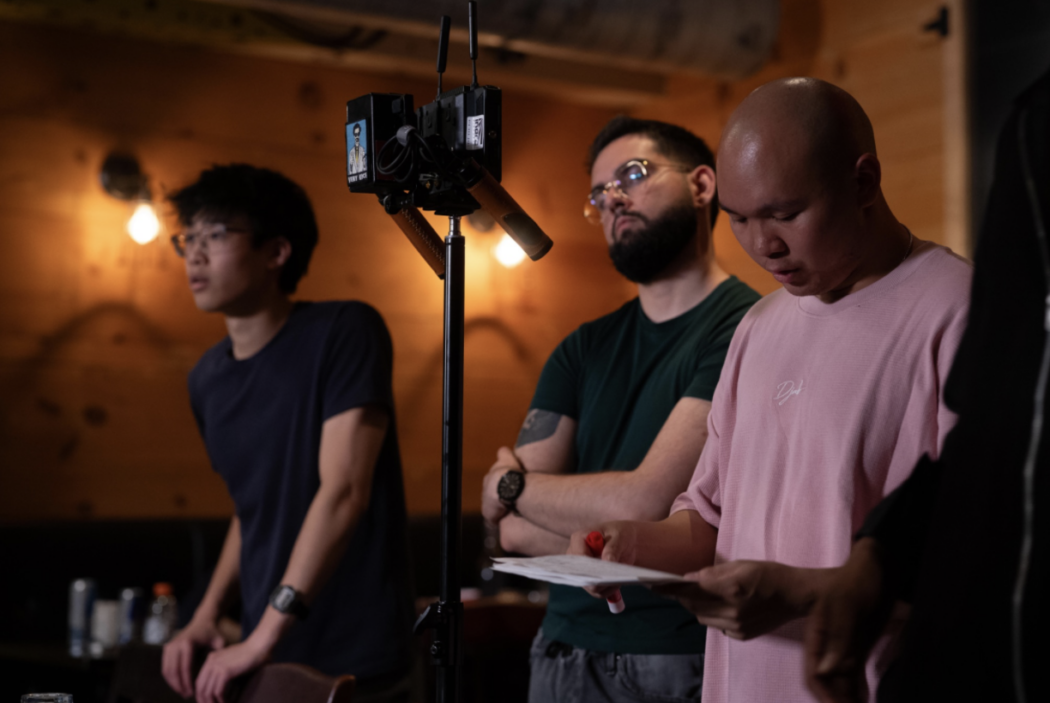
For aspiring English-speaking filmmakers, the independent film scene is an alternative route that may offer more opportunities outside of French production. “The student filmmaking scene specifically…I find it very diverse, and there’s just so many cool projects,” Mortellaro also notes. Through organizations like TVM, students can access equipment, build creative networks, and showcase their work at independent festivals, such as the Fokus Film Festival.
For filmmakers hoping to break into the mainstream industry, independent production may not be enough. Many English-language filmmakers consider leaving Montreal to build their careers elsewhere in Canada with larger English production industries such as, Ontario and British Columbia. “I would like to stay [in Montreal], but I would need to consider going elsewhere…in terms of being successful in this industry, I would eventually have to appeal to other audiences as well,” says Mortellaro.
However, other filmmakers remain hopeful and committed to independent filmmaking in Montreal despite limited opportunities. Recent McGill graduate and TVM alumnus Minh Quan Hoang explains that “though there are limited English opportunities in Montreal, it depends on what your goal is with film. My goal is just to tell the stories I want to tell…and I believe that if you build the necessary portfolio, you’ll be able to find producers or people that will make your vision come to life.”
Financial barriers further complicate the issue. For many students and independent artists, the cost of living, grant dependence and work-life balance create additional obstacles to working in the film industry. For students, however, the barriers extend beyond language. Producing even a short film can require access to certain equipment, locations and time, which are resources that not every student can afford. “Filmmaking is a rich person’s game,” Quan Hoang remarks. Mortellaro echoed this concern, noting that “a lot of my peers don’t have the ability to make a short film every year.” The financial strains, combined with the shrinking English-language industry, make filmmaking increasingly inaccessible for emerging Anglophone artists.
While reports show that Montreal’s English-language film industry is struggling, Montreal’s creative community continues to persevere, creating its own opportunities through independent work. “Even though it’s harder…I’m still trying to make the movies that I want to make,” Quan Hoang said. The industry may be changing, but Montreal’s artistic spirit remains strong in the face of uncertainty.