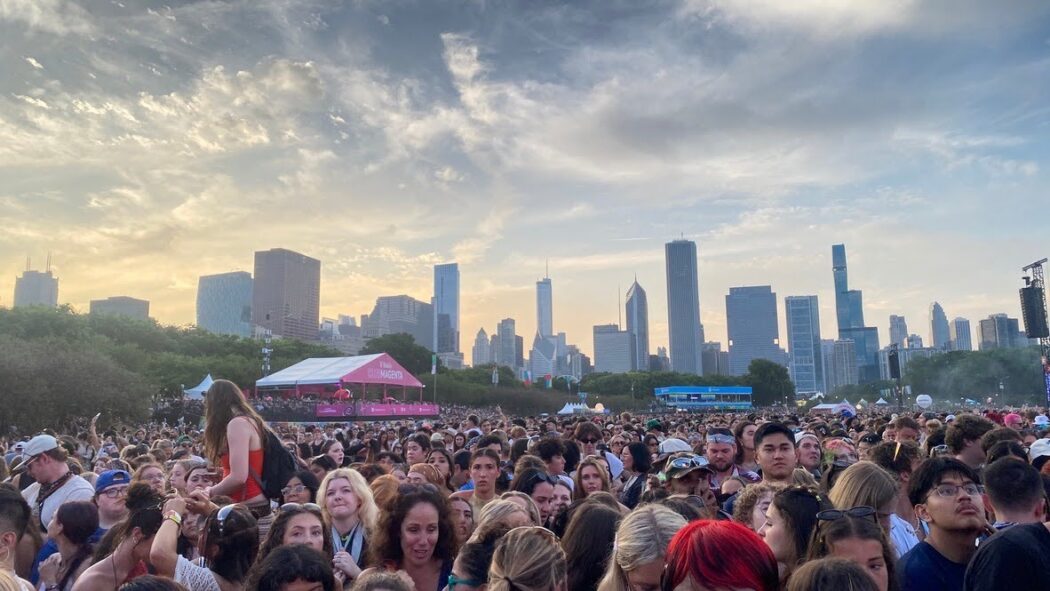
If you attended a music festival this summer, whether it be Osheaga, Coachella, or, like me, Lollapalooza, I bet you fell for some marketing tricks you didn’t realize were in place. I went to Lollapalooza for all four days in Chicago this summer, and while spending a whopping $550 CAD on tickets may not seem like something to be proud of, I felt it was truly an accomplishment. 4-day tickets sold out in a matter of 15 minutes, and many of my friends never even made it through the queue. The speed at which tickets sold for a festival where over 450,000 attend every year reveals just how effective the psychology and marketing of ticket prices are; encouraging consumers to drop ridiculous amounts of money to mosh in swarms of suburbanites and high schoolers for four days straight.
Don’t get me wrong, I was incredibly excited to go and consider it a staple of a Chicago summer, but I’m also aware of the fact that I fell for every trick in the book when getting tickets. Lollapalooza releases their lineup a few days before tickets go on sale, but they don’t release who is on what day. As a potential buyer, you have no way of knowing if everyone you want to see will be on the same day, in which case you would be perfectly happy to go for one day instead of four. Also important to note, they do a presale of 4-day passes at their lowest price an hour before the general sale, at which point the day-by-day lineup is out and 1-day and 2-day passes become available. This is the first strategy. Withholding the day-by-day lineup until the cheapest passes are sold is a masterful exercise in information withholding. The safest move to ensure you’re able to see everyone really does seem to be to go all four days. This uncertainty is weaponized, pressuring consumers to make an uninformed decision and commit without knowing what they’re signing up for.
Clearly, I didn’t let this bother me. Here was my situation: I’m a college student, albeit employed, but still not swimming in money or living off my parents’ credit card. I was super excited about the lineup and was confident that I wanted to go more than one day. I didn’t know how much tickets were going to be, but last year (likely slightly less than this year) during the presale they were $535 before fees for all four days, after which the price increased to $580. I decided to go for it. I rarely spend money and knew I would regret it if I didn’t try during presale, plus I already signed up, and it would be less competitive than the general sale. This is the second strategy. A limited-time presale creates a sense of urgency, scaring easily swayable consumers like me into panic-buying before the limited available quantity is gone.
The third strategy is the price increase. Not only is presale a smaller pool of potential buyers who bothered to sign up, increasing your odds of securing tickets, but it is also the cheapest 4-day passes will ever be. Now, in my mind, it’s not as if I’m dropping $550, but really I’m saving $45 because I inevitably was going to buy tickets, and decided to be smart and buy them while they were cheaper. This idea of comparative pricing is hugely important, and influences our decision-making more than we might care to admit.
After successfully battling my way through the queue and securing not one but two (!!!) 4-day passes for myself and my friend, I took a look at the prices for 1 and 2-day passes out of curiosity. I was floored. The starting price for a 1-day pass was $257, and a 2-day pass was $515. I was feeling great at this point. You’re telling me that for four days versus two, it was only $35 more? I had blindly spent $550 hoping that I wouldn’t regret it after seeing the day-by-day lineup, and instead of regret, I was feeling joy and relief in my boldness. This is strategy four. I don’t feel like I just spent $550; I feel like I practically made money! Two days was such a bad deal in comparison that it made me justify my own spending that much more. This right here is the decoy effect, and it is everywhere. By pricing 2-day passes at so much per day compared to all four, it’s merely a decoy to make dropping $550 for all four suddenly seem much more doable.
Consider the classic popcorn example. You’re at a movie theatre getting snacks. Your popcorn options are a small for $4.00, a medium for $6.50, or a large for $7.00. Some of you may be economically responsible (and realistic about how much popcorn you want) and go with the small, but I bet most people would spring for the large. The medium, however, will not be very popular. For only $0.50 more, why would anyone not just get a large instead? The medium as the decoy reveals how much of our decision-making is based on comparison, as opposed to genuine value. The medium wasn’t there to give you more flexibility; it’s there to justify getting the large in comparison, the exact same concept as the 2-day passes.
Lollapalooza is not the only festival that uses these strategies. Osheaga is three days as opposed to four, making the price breakdown a bit different, but still creates a compelling case for going all three days. One day at Osheaga this summer was selling for $180, and all three were $425. This means two single-day tickets would cost $360, at which point it’s only $65 more to go for all three. While not quite as pronounced as the two versus 4-day pass prices at Lollapalooza, it’s still easy to feel as if you’re getting ripped off if you don’t just commit to the whole weekend.
Unfortunately, understanding these tactics does not make you immune to them. I knew I was being played but still spent $550 and somehow felt like I had won something. The tricks are so effective that I felt zero buyer’s remorse, and instead thought I had made economically savvy decisions and beat the system. The reality was I fell right in line with a system designed to compel me to spend.