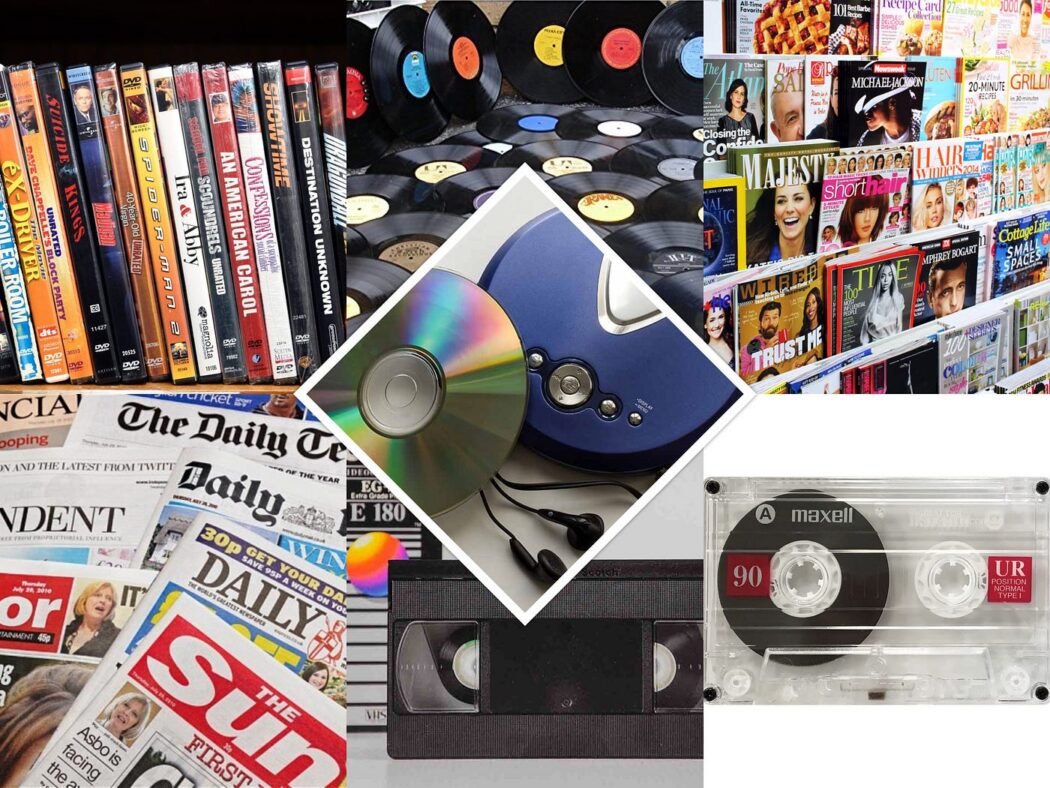
In this digital age, where information is instantaneous, the rise of analog culture might seem regressive. However, an important sociological shift is underway: people are reaching for vinyl records, Polaroid cameras, sports cards, and hardcover books like never before. This resurgence of physical media is not just an elitist rejection of technology but instead an indicator of a much larger trend taking place, one that affects our sense of self and determination of identity.
Imagine you are sitting with a group of people, and you decide to watch a movie. Between endlessly deciding on what to watch, scrolling through platforms to see which have it available, and finally renting the movie, not only have 25 minutes elapsed, but you are paying for the right to borrow the film. There is nothing inherently wrong about this, but I think this unconscious submission to constantly borrowing media from corporations and housing it on a server is causing a sense of disconnect from the media we consume. The tactility of these experiences is important, as Michael Caine writes: “Analog experiences permit us to be slow, to appreciate imperfection, and to truly engage with the world around us. From the soft crackle of a record needle to the smell of freshly printed Polaroid film or the quiet rustle of a book’s pages, these small sensory experiences hold big emotional value.”
This trend is not simply a subjective observation, but a multi-billion-dollar shift in the physical media market. Google Trends suggests a 160% increase in searches for “analog hobbies.” Similarly, with sports cards, “the sports card market has experienced significant growth, with a global market size valued at roughly 12-13 billion in 2023/2024, projected to reach 47-50 billion by 2032,” according to Market Growth Reports. Even Polaroid, which went bankrupt in 2001, has seen tremendous success in recent years. “The global photographic film market was estimated at 2.69 billion USD in 2023 and is projected to reach 3.54 billion USD by 2031, growing at a compounded annual growth rate of 4.3%” (Source).
With this tremendous growth, the question arises: What does this mean on an individual, person-by-person level? I think this trend represents a yearning not only for nostalgia, but for the tangible psychological connection that fosters a sense of ownership. If every form of media we consume is digital, what does that say about our construction of identity and taste? I went on a deep dive into the academic literature that explores the connection between ownership and the construction of self, and in this study, it was found that “according to Dittmar (1992), it is common for people to psychologically experience the connection between self and various targets of possession… Possessions come to play such a dominant role in the owner’s identity that they become part of the extended self (cf. Belk, 1988; Dittmar, 1992). Mann writes, “‘what I own feels like a part of me’” (Study). If more and more of the objects we care for and adorn are “rented,” how does this affect our “extended self”? New payment systems of buy now, pay later (BNPL) are ever-growing, with “the global BNPL market is projected to reach $560.1 billion in 2025, a 13.7% year-over-year increase, with user adoption accelerating toward 900 million by 2027” (Chargeflow). We are continuously “owning” less and less goods, so I think this resurgence couldn’t have come at a better time. The return of a desire for analog media reflects a deeper longing for intentionality, allowing us to slow down appreciate imperfection, and truly engage with the world around us.
However, I do think it is important to mention the reality of the matter, in that despite this widespread resurgence, digital media across the board is greatly outperforming the analog ones I chose to highlight. Despite this, all hope is not lost. I think the conscious effort to be intentional with the media we consume, and by extension, our construction of identity, will prove to be useful in times to come. So support your local record shop, used bookstore, or movie theater. Rethink how you interact with the media you adore greatly, and be intentional with what you own.