
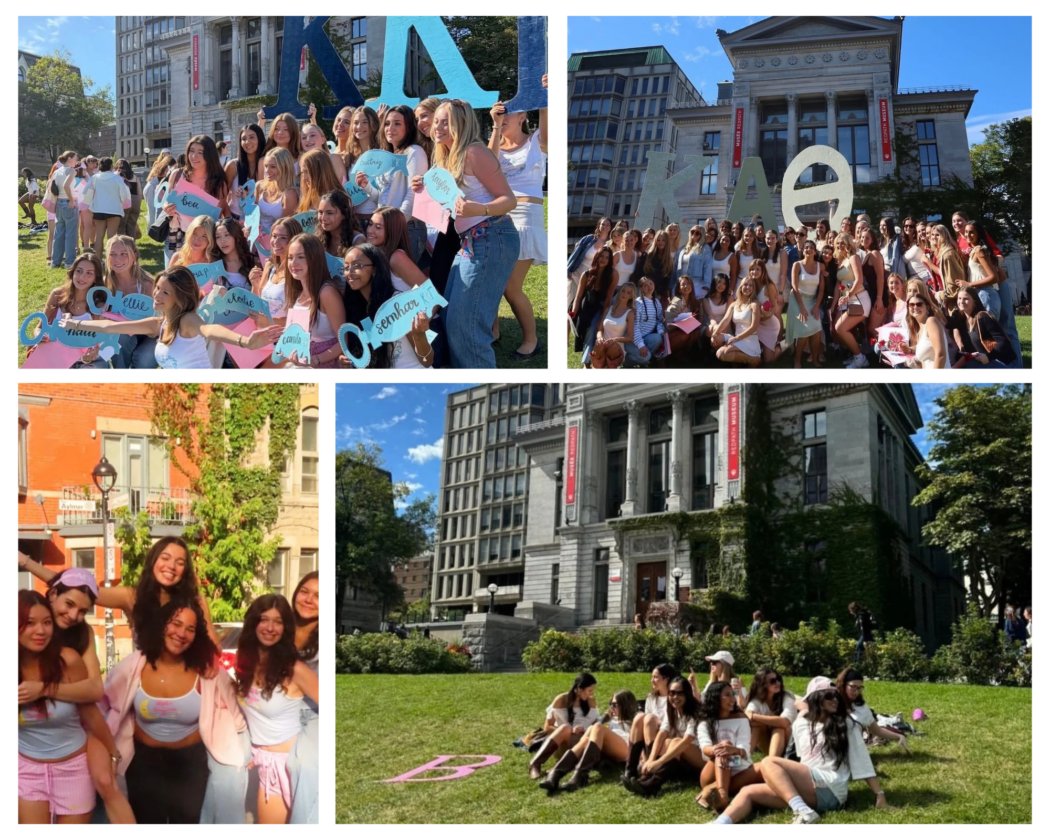
This past Sunday was Bid Day, marking the end of sorority recruitment week for 2026. 298 women signed up for formal recruitment, the largest number McGill sororities have seen since 2014. When Sunday came around, 100 potential new members (PNMS) opened up their Bid Day cards on the Lower Field and ran “home” to their new sororities.
Recruitment was broken up into three rounds: sisterhood, philanthropy, and preference. In the first round PNMs visit all five sororities and spend time talking to active members. During the second round, philanthropy, PNMs return to up to three chapters. This round focuses on the organizations each sorority supports and how its members contribute to those causes. The final round, preference, gives PNMs a chance to have more meaningful conversations with members and consider whether they see themselves fitting within a chapter’s values and community.
The PNMS are matched with sororities through a mutual selection process. For those who are unfamiliar with this system, the PNMs rank the sororities they prefer, while each house separately ranks or selects the PNMs it wants to invite back. A matching system takes both sides’ preferences into account throughout recruitment and, at the end, determines the bid that appears on each PNM’s Bid Day card.
Of course, recruitment is only one part of what people associate with sorority life. Coming from the U.S., I was already familiar with the much larger, and often more controversial, reputation Greek life carries on college campuses. Sororities carry plenty of negative stereotypes and many of the criticisms behind them stem from legitimate concerns. On some campuses, organizations intended to create community can instead reinforce exclusivity, social hierarchies, and financial barriers.
That context is part of what makes Greek life at McGill interesting. At a university where sororities do not control access to the broader social scene, joining one feels less like a prerequisite for belonging and more like one of many ways students can find community. This allows sororities to shift back to their original purpose: a place for young women to build relationships and support one another academically, socially, and professionally. It becomes a choice that each student can make on their own terms, rather than something they feel they must do in order to feel included in social life on campus. There are many students, myself included, who might never have considered rushing at another university.
Part of what makes McGill’s Greek life different is its scale. Every chapter has less than 100 girls; making it possible for members to build relationships across pledge classes and feel connected to the larger chapter rather than simply belonging to another campus organization.
Being a part of a sorority has shifted my entire experience at McGill for the better. During my first year, I was searching for something that could ground me as I adjusted to university life, and I found that in my sorority. For me, that sense of belonging is formed by having someone I can call for advice, familiar faces in classes and on campus, and following traditions that connect one group of students to those who came before them.
With recruitment reaching its highest participation in more than a decade, preserving what distinguishes McGill’s version of Greek life may require being intentional about the culture it creates. Last Sunday, these girls weren’t simply opening envelopes containing Greek letters; they were choosing whether this small, distinctly McGill version of sorority life could offer them the same thing many current members have found in it: a community within a much larger university.