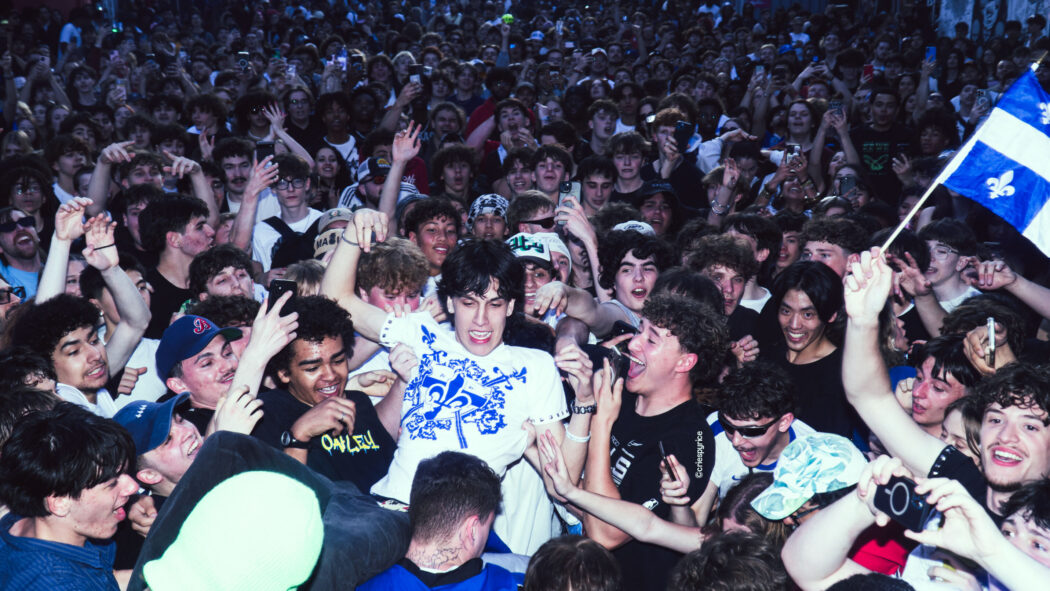
With the upcoming provincial elections, one question resurfaces at the core of debates: do Quebecers want their province to become its own country? This year, the surveys show that only 30 percent of the population wish for Quebec to separate from Canada, though the 18-34 age group expresses support six to eight percent higher than the average. This number is what remains of a powerful wave of advocacy led by Gen Z through social media and culture during the summer of 2025.
Last summer, the separatist movement was on everyone’s tongue, as a generation not yet born at the time of the 1980 and 1995 referendums reappropriated the movement with a voice of their own. TikTok edits using political rap songs from an upcoming artist, known as Kinji00, introduced many young people to the cause for the first time. Older generations, who had voted Yes in the 80s and mid-90s, felt a renewal of hope, as they saw a new generation embracing a dream that they themselves carried for decades. The numbers were historic as 48% of support among 18-34-year-olds was reported in June 2025. This sudden surge of approval for Quebec’s sovereignty had not been seen from a younger generation since the 90s, a notable shift, since as recently as 2023 that same age group was among the least supportive when it came to wanting Quebec to become its own country. Even as the statistics have fluctuated with the political climate since, this wave breathed new life into a movement that had stagnated for almost 25 years.
As support rose and fell in the months following summer 2025, some dismissed the surge as a passing trend, tied to sovereignty’s newer, “cooler” image. It can be said that the sudden peak in advocacy from GenZ came from an internet wave, but there are more layers to uncover. In my view, one of the greatest factors was the rise of young artists using their newfound recognition in the Quebec music scene to voice their support for separation. For as long as I can remember, many young Quebecers, myself included, associated Quebec culture with the music our parents would listen to, such as Jean Leloup, Beau Dommage and Les Cowboys Fringants. To us, that music was tied to their nostalgia, one we couldn’t quite identify with. Then this 17-year-old rapper with blue fleurs-de-lis grills appeared and garnered widespread curiosity.
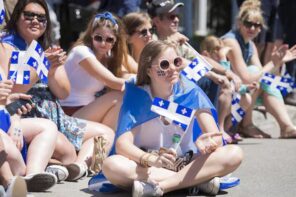
The singer Kinji00 played a major role in summer 2025 as part of several young artists whose work reflected support for separatism. He became known for his songs with a clear political stance, and his album titled “À la prochaine fois” (Until Next Time), a reference to René Lévesque’s famous speech following the results of the referendum of 1980. Interviewed at an independentist grassroots organization’s 2025 Saint-Jean-Baptiste celebration, many young people admitted they had never thought of separatism before Kinji00’s breakthrough. A new generation was politicized in favour of Quebec’s independence through Québécois media, culture, and music. The 17-year-old rapper recognized this himself, signing, “la nouvelle vague souverainiste, je suis le CEO” (the new sovereignty wave, I am the CEO) and explaining in interviews that he’s a separatist for the culture.
Kinji00 also helped make clear that there were no requirements around where you were from or born to be an advocate for Quebec’s sovereignty, as he and his brother and producer are half-Portuguese and were born in Portugal. He makes his stance clear when he raps “Québec sur le coeur on s’en calisse où t’es né” (Québec on my heart, we don’t care where you were born).
Kinji00 is just one of many examples. The singer Lou-Adriane Cassidy and the YouTuber, commentator, and documentarian Mounir Kaddouri, also known as Maire de Laval, are also recognized as leading voices of this youth wave. The 29-year-old Lou-Adriane Cassidy said that in her eyes, this new wave is not to be compared with those of the past, since it looks towards the future, in a non-partisan and inclusive way, through love and celebration of the culture. Kaddouri, the child of immigrant parents from Morocco, brought the youth movement to light through his mini-documentary made in collaboration with Urbania. With that project and his podcast, he advocates for Quebec culture to hold space for younger artists and audiences, arguing that young people are often overlooked because they consume less traditional media.
In an interview for the Journal de Québec, Paul Piché, an established singer-songwriter who has supported separatism since the 70s, offered a different outlook. Artists, he said, are a reflection of society; therefore, it is not surprising that many stayed quiet on the idea of Quebec’s independence after the referendums of 1980 and 1995 failed. Now, however, their open support for independence seems to mirror a greater shift in public will. By his logic, artists may have spoken up because they felt their public was more receptive to the idea. Piché’s framing would signify that last summer’s wave of younger independentist artists was not the cause of the movement, but evidence that it was already underway. Either way, what stands out is that a generation with no memory of the 1980 and 1995 referendums found its own voice to bring the sovereignty debate back to life through their own lens.
Together, these young artists, singers, actors, and YouTubers, openly identifying as independentists, gave the movement a new face. Young people could finally see it as something more than their parents’ old tale of what might’ve been, and the antiquated, mythical perception of separatism was dissolved once its main voices came from their peers. We’ll have to keep an eye on October 5th to see whether Gen Z’s independentist wave extends to the ballot box.