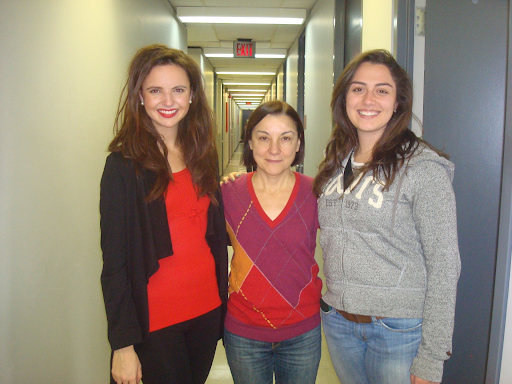
In 2011, two Desautels students ran into a problem most would have just accepted: the type of class they wanted to take didn’t exist. Joanna Klimczak ‘14 and Mariana Botero ‘13, students at Desautels Faculty of Management, noticed a gap in the curriculum: there was only one core course in sustainability available to them. Prospects were similarly bare at other institutions, both at the undergraduate and graduate levels, so the two decided to build a program themselves. In 2014, while finishing their own degrees, after failed pitches and help from faculty members, the Minor Concentration in Social Business and Enterprise was formally launched, making it one of the first undergraduate sustainable business programs in the world.
Early in her U1 year, Joanna Klimczak reached out to then Associate Academic Dean of Desautels, Emine Sarigollu, to propose the introduction of a social business program within the faculty. Dean Sarigollu was interested, so with her backing, Klimczak embarked on a two year journey of researching the value of such a program, risks associated with introducing one, building a curriculum out of existing courses at McGill, and a long series of logistical and administrative challenges.
Somewhere along the way, Klimczak met Mariana Botero, a like-minded student who was looking for a way to create a positive impact in the world, but without a concrete means to do so. Together, they continued to build a social business program, and with support from Robert David, Head of Strategic Management, and Associate Academic Dean from 2013-14, Robert Hebdon, began the long approval processes to have it officially adopted by the University.
After three years of work and one failed pitch to the University in 2012, the Minor Concentration in Social Business and Enterprise was launched in 2014, featuring a brand new course, Intro to Social Entrepreneurship, with many more to come. When asked about the biggest challenge in bringing the program to life, Klimczak noted that proving the program and its ideology were legitimate was one of their greatest challenges. At the time, creating social change was typically a task delegated to governments and NGOs, while corporations existed somewhere outside of it. However, she also emphasized that having Botero by her side and the support they received from faculty members, notably Sarigollu, David, and Hebdon, made it possible.
Students feel the impact of social issues the most because they’re the ones who will inherit global problems like climate change, yet they’re usually told to work within limiting existing structures instead of building new ones. With the Social Business program and its successors, a new path was opened for students, by students, to create a positive change in the world around them. After all, if institutions can’t give students the tools necessary to create social change, sometimes they may have to take matters into their own hands.
There was no formal path for what Klimczak and Botero wanted to do, so they built one for themselves, and their story is not unique to them. That’s the real message here: any student sitting on an idea has the same power for change within their institution and beyond, no matter how outlandish or unqualified they feel to pursue it. For students, the people in power are more accessible than they think, as Klimczak says:
“Call the academic dean of your department, and make it happen!”
Since then, the program hasn’t stayed static: it has seen growth in participation, new courses have been added to stay relevant, and Klimczak is now back teaching some of the courses in the program, watching attitudes shift firsthand. Today, sustainability is a standard in business school curriculums across the world. Succeeding programs like the Minor in Social Entrepreneurship at Desautels, built by a different team, followed the path Klimczak and Botero opened.
The idea shaped their own careers just as much. Botero’s path took her to the Global Social Business Summit in Vienna, three years of work at the Yunus Center at the Asian Institute of Technology in Thailand, a nonprofit she co-founded, and now work in philanthropy consulting. Klimczak went on to found Northern Light Capital Partners, building tools to help move capital toward sustainable ends.
What advice do Klimczak and Botero have for McGill students seeking to create change? Botero’s advice: “Find a partner who keeps you motivated … and whose capabilities and strengths complement yours … The work can move so much faster, and [be] so much more joyful when you do it with someone else.” Klimczak added that
“It would have been so much more work, … and probably more tears, …, and more insecurity if we didn’t have each other.”