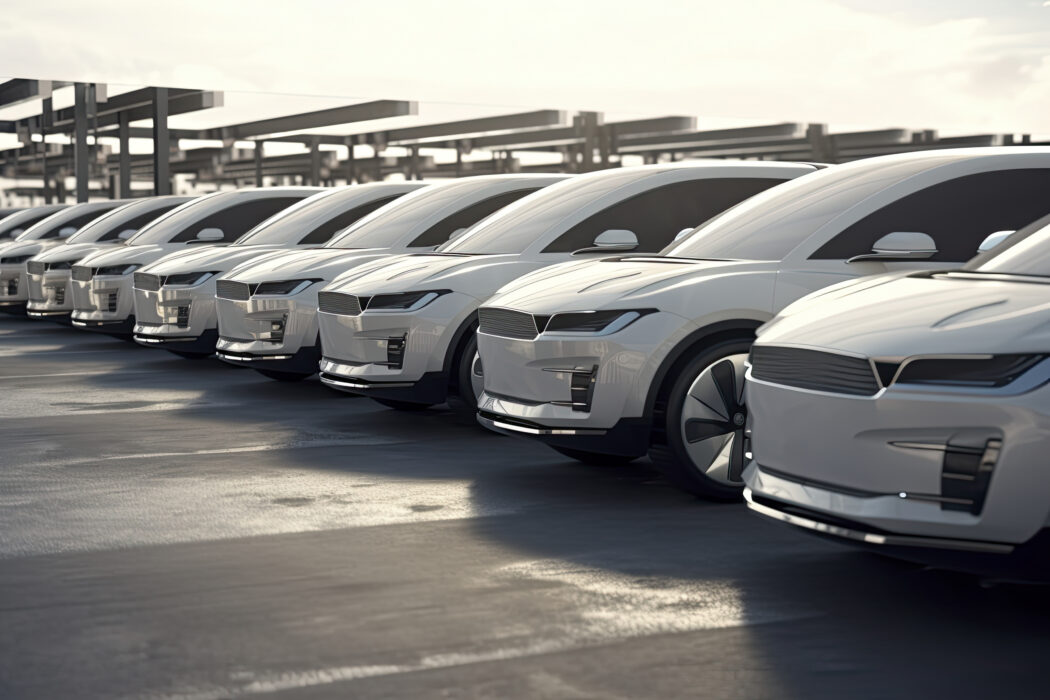
Think about the last time a new car made you stop and look on the street. Maybe it was a Mitsubishi Lancer Evolution or the timeless look of a Porsche 911. Now, walk onto any modern dealership lot, and you are greeted by a sea of identical SUVs that lack personality vehicles once had.
To understand how we got here, we have to look at what governments were trying to achieve across North America and Europe. Lawmakers had set goals to cut smog, reduce greenhouse gases, and spur clean energy jobs. To force that change, they “require[d] automakers to reduce tailpipe emissions and improve the fuel efficiency of the vehicles they make, including by selling more electric vehicles” to hit strict targets or they’d face financial penalties. Thus, global automakers like Ford, General Motors, Stellantis, and Volkswagen poured over $100 billion into converting to electric vehicles and plan to invest another $1.2 trillion through 2030.
The issue is that developing new electric technology from scratch is extremely expensive. So, to cover those upfront costs, car companies stopped building those lightweight sedans and affordable sports cars we once knew, models that made very little profit per unit, and switched production to the oversized 5000 pound SUVs we’ve started to see more of. They didn’t flood the market with these giant SUVs because drivers begged for them. Rather, big trucks carry high price tags, meaning, automakers could make large profit margins on every sale to subsidize mandatory electric research.
Now, consumers are not against clean energy, but they are rejecting the awkward compromise car companies forced onto them. Drivers have become increasingly hesitant to go all-in on pure battery power. According to McKinsey & Company’s Mobility Consumer Pulse survey, only 12% of American car buyers plan to make a pure battery-electric vehicle their next purchase, while 32% say they will never switch to electric at all. Instead, buyers are leaning toward plug-in hybrids as a practical middle ground. This isn’t due to a lack of environmental awareness. McKinsey’s data shows it comes down to driving range and, above all, price. They demand more affordability and at least 500 kilometers to minimally match a standard car fuel tank before even considering an EV.
This disconnect between government mandates and how buyers feel has backed Western automakers into a corner. Rushed by the timeline, they had no chance to build a domestic supply chain, thus, policymakers created an issue for themselves: Western car companies ended up charging premium prices for these uninspired cars, while foreign competitors treated the transition as an opportunity to build sleek tech-focused vehicles at a fraction of the cost.
China’s rapid rise in the car market is just that, and it proves Western consumers aren’t rejecting innovation, they are just rejecting the overpriced, dull cars that they are seeing produced around them. As Wall Street Journal columnist Joanna Stern put it after she test-drove Xiaomi’s SU7 Max, “I test drove a Chinese EV. Now I don’t want to buy American cars anymore.” And in response, rather than giving Western companies leeway in the mandates to have the opportunity to develop better software or designs, Western governments responded with 100% protectionist tariffs on China, effectively trapping their domestic buyers with expensive compromises that they don’t want to buy.
Thus, Western automakers stopped building cars that evoke emotion and started manufacturing appliances designed to satisfy a quota. But the quota isn’t the one buying the cars. People do. And when those people are given the choice between an overpriced SUV and keeping their older, distinctive vehicles on the road, they choose to wait. Until car companies stop hiding behind regulatory quotas and start competing on craft, design, and genuine driving pleasure, like they once did, the market will stay frozen for them. Automakers will continue producing for a resistant public that is still waiting for a car on the street that finally makes them turn their heads again.