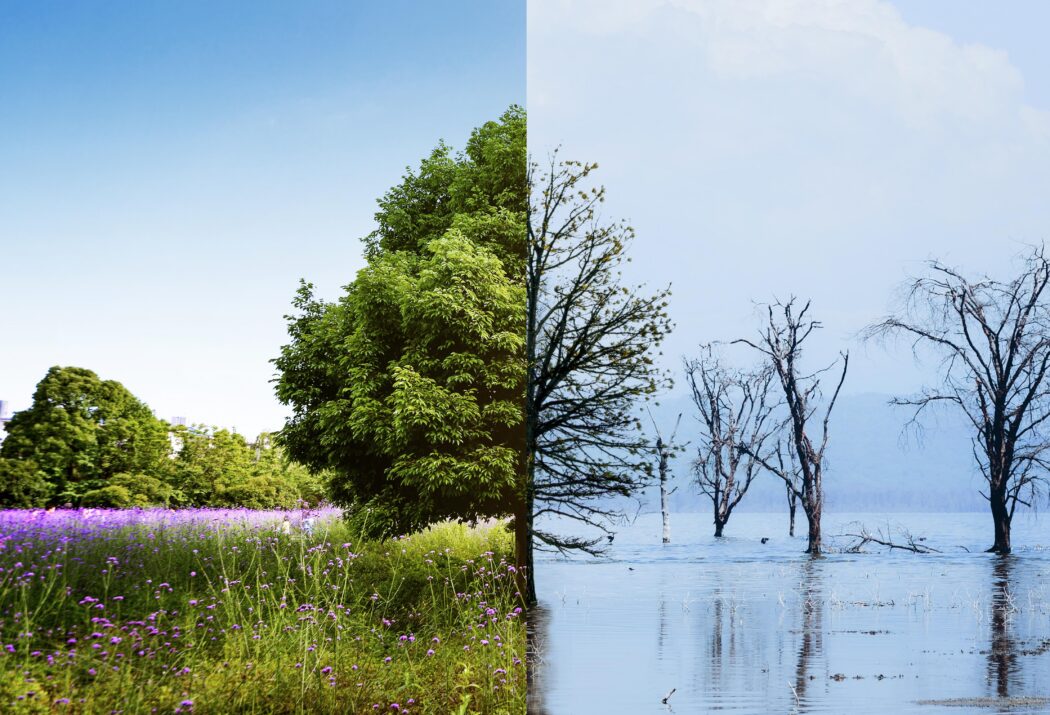
Since the Industrial Revolution, humans have changed Earth’s environment to an unprecedented degree. Increased greenhouse gas emissions and population growth have greatly altered the composition of the atmosphere and the global consumption of fossil fuels, which could cause irreversible changes to our environment. While innovations such as the steam engine were created to increase productive efficiency, improve living standards, and massively boost the economy, we’ve failed to lower our carbon emissions and energy use with more advanced technology.
With the continued growth of industries we see today, countries with sufficient resources, funds, and workers can export many more products than previously possible, but as climate change continues, 18% of GDP worldwide could be wiped out if the global temperature rises by 3.2 degrees Celsius by 2050. This increase seems very plausible as targets of the Paris Agreement, such as the net-zero emissions targets, are not being met, and we are still on track to raise the temperature of the planet. If no preventative measures are taken, the GDP of 48 countries, including Malaysia, Thailand, India, the Philippines, and Indonesia, representing nearly 90% of the world’s economy, will be devastatingly affected. These are also the countries with the fewest resources dedicated to mitigating and adapting to the effects of global warming.
While some of the world’s wealthiest people reside in places like the United States, Canada, Switzerland, and Germany, countries expected to experience the least severe effects of global warming, they too should be concerned. The world’s wealthiest should also be concerned, as billionaires are at risk of missing out on future economic opportunities and the benefits of the economy we have today. The uncertainty of the future of the environment makes it difficult to predict how financial markets will act, hurting investors’ and companies’ abilities to manage their assets effectively.
As climate change continues, more natural disasters and unpredictable weather events are occurring worldwide. This puts financial pressure on organizations like the World Food Programme to send resources to those in need, especially in less developed countries and those that are susceptible to natural disasters. Natural disasters and unpredictable events can also lead to rising sea levels, which could threaten infrastructure in coastal areas. This destruction can negatively affect exports from ports and isolate communities from the resources they need.
Extreme weather events have also placed massive strains on some insurance companies due to the number of climate-related claims that continue to be filed. In high-risk areas, such as Miami, which has been increasingly experiencing disasters, insurance companies are raising premiums or outright refusing to cover the area. In places where insurance payouts are lacking when major events occur, the brunt of the costs to fix infrastructure falls on the governments and households. Human activity has increasingly been using the fossil fuels found on Earth, but other natural resources are also being depleted by climate change.
Along with more frequent weather events, there is an ongoing degradation of natural environments, changing the landscape of the Earth, and affecting productivity. Warming temperatures affect the ability of many industries, such as agriculture, construction, and transport, where outdoor work is common. Higher average global temperatures can lead to heat stress, slowing working speeds and raising health risks for labourers. The damage to these vital industries could cost the global economy up to $38 trillion USD a year. The manufacturing and logistics sectors will be faced with higher operating costs than now, with more cooling parts and agents necessary to maintain safe temperatures in machinery and working environments. Agriculture will be majorly affected by the rising global temperature and the change in weather patterns, with heatwaves and rainfall changes reducing productivity in many regions, causing produce and livestock prices to increase. This could create a domino effect, disrupting the supply chain of exports around the world, reducing government tax revenue, which could possibly limit the resources available to help farmers adapt to these changing conditions.
In the end, climate change is not only an environmental crisis that needs to be addressed immediately, but it also poses an economic risk worldwide. It is reshaping global markets and changing industries, but its effects in the future may be more unpredictable than we’ve seen thus far. As a community, we need to make a change to prevent further degradation of our environment before the effects of climate change become irreversible.