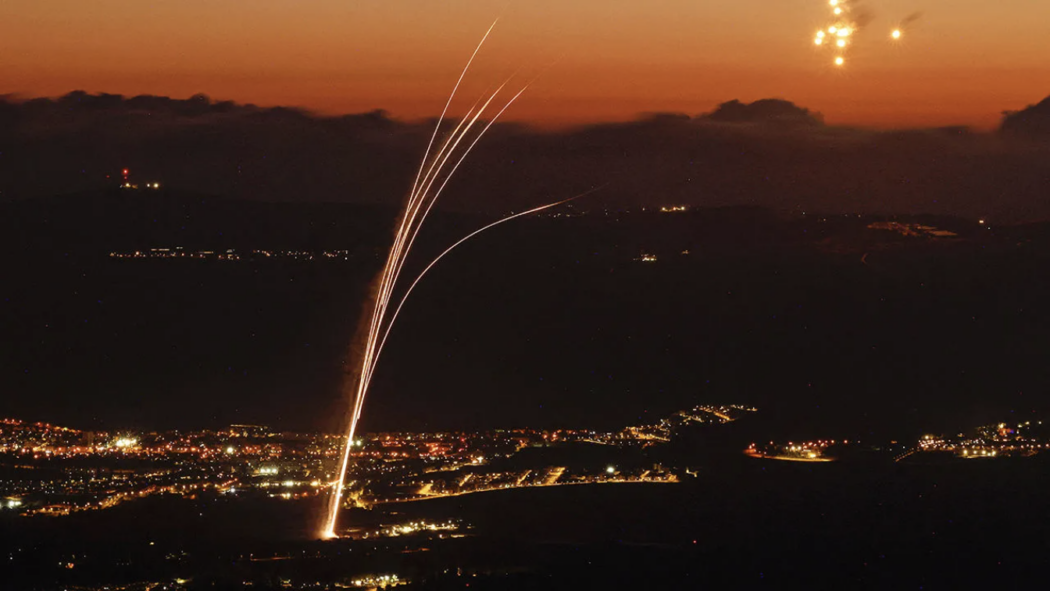
Lebanon, my home, is a small country of winding roads, towering cedar trees and olive orchards that has witnessed generations of history. It sits along the Mediterranean coast, and is filled with, in my opinion, some of the most hospitable and joyous people. It is a place that continues to carry hope despite everything it has suffered. From my grandmother’s apartment, the sunsets burn in deep orange and red, stretching across the mountains in a way that feels impossible not to snap a photo of. Yet those same skies are sometimes interrupted by the sound of missiles and falling airstrikes, turning beauty into something so fragile and helpless.
In response to this reality, however, one cultural practice never dies: humor. For many Lebanese people, humor is used as a social mechanism of coping. In a country subjected to so much pain, comedy does more than entertain or distract – it allows people to endure.
Humor as a Way of Coping
Shahe Kazarian is a Lebanese scholar and educator whose research focuses on the role of culture in physical and psychological health. Kazarian’s study Humor in the collectivists Arab Middle East: The case of Lebanon (2011), allows us to identify several functions of humor that help explain its role in coping with adversity, including individual cognitive benefits, tension relief and interpersonal benefits. Lebanese humor scholars such as Riyad Hanin (1979), Anis Frayha (1988) and Fuad Khouri (2007) emphasize the importance of humor in comforting stress, fear and despair. For example, Hanin describes humor as a force capable of “lifting us from the dark ocean and melting our sorrows into hope” (Hanin (1979), in Kazarian (2011)).
In the Lebanese context, this function of humor is magnified by its generational scope. By reframing turmoil into shared moments among a group of people, humor is a shared form of resilience that allows individuals to connect with one another instead of being overwhelmed by reality on their own. This demonstrates that humor doesn’t only operate as an individual form of healing but as a strategy embedded into Lebanese culture for emotional survival.
Lebanese Political Humor
These individual and collectivist functions of humor can be seen through Lebanese cultural production, specifically when it comes to political satire and theatre. Within these spaces, humor becomes a shared social practice that unites people among dark political times.
The most iconic example within political humor comes from the playwright and composer Ziad Rahbani (Jan 1956 – July 2025). Rahbani wrote several plays that reflected his leftist, secular pro-socialist ideology. According to a family member in Lebanon, “his plays gave the civil war generation something to laugh about, especially during the darkest days of our lives.” Rahbani uses humor to reflect the fragmentation and absurdity of political situations – offering his audiences a form of escape from reality. Through his characters that became national heroes, his work became embedded in Lebanese discourse and culture. Lebanese president Joseph Aoun described him as “not just an artist, but a complete intellectual and cultural phenomenon,” and as “a living conscience, a rebellious voice against injustice, and an honest mirror reflecting the suffering and marginalized.”
One of Rahbani’s most well-known plays, A Long American Movie (1980), takes place in a psychiatric ward where young men of different religious backgrounds interact during the war. The setting itself functions as a metaphor for the instability of Lebanese society, wherein humor often comes from wordplay and situational irony. In one scene, a political activist attempts to explain a conspiracy theory, only for another character to interrupt him with a seemingly unrelated question: “do you have a bridge installed in your mouth?” When the activist responds innocently with “yes,” the reply becomes a dark joke, warning that he might be killed and thrown under that “bridge,” a reference to real practices during the civil war. The humor in this joke comes from its double entendre. It refers to both a dental bridge – when two crowns are connected by artificial teeth – and when people used to get kidnaped, murdered then thrown under bridges during the war in Lebanon. Through laughter, Rahbani turns the tragic reality of a war-time practice into something emotionally bearable. As one individual who lived through the war remembers:
During 1983 to 1990, death was an almost daily occurrence. You could die from random mortar bombs, car bombs or being kidnapped by militiamen of Hezbollah or the Syrian army or whomever. The prospect of death was part of our daily lives. One option is to keep thinking about the dark prospects of dying, or turning those same lines of events into something satirical.
In another scene, during the sound of gunfire, a character runs out shouting “saboonie,” a word that in the Lebanese dialect can mean both “they shot me” and “soap.” The audience first hears the cries and interprets it as a sign of danger, but then the character appears completely covered in soap, asking the nurse about his missing soap instead. This play of words and collective misinterpretation transforms a moment of fear into one of comedic release. Ziad Rahbani’s plays would be in theatres, for audiences to watch and eventually they were being recorded on cassettes. An audience member of Rahbani’s plays recalls how
during the war we would listen to these cassettes two to three times a week, I can’t remember how many times I’ve listened to them, they were like my escape.
This experience reflects a broader reality shared by many Lebanese individuals who lived through the conflict. It highlights the resilience of people during periods of so much pain.
Overall, humor in the Lebanese context extends beyond simply entertainment. It allows people to reframe and manage distress, while simultaneously bringing them together. Just as the skies from my grandmother’s apartment can hold both beautiful sunsets and the sounds of conflict, humor does not erase the realities Lebanese people face. Instead, it makes space for moments of joy alongside them. Ultimately, humor persists as a cultural practice that allows people to endure hardship without being entirely consumed by it.